
5 Best Weather Radios for Home Alerts and Outages in 2026
The short answer
The best weather radio for most homes is a SAME alert radio by the bed, backed by a crank radio in the kit.
Last updated September 2026
Contents9
- #1. Midland WR120B: best bedside alert radio
- #2. Midland ER310: best crank weather radio
- #3. Raynic 5000mAh Radio: best alert scanning on a crank radio
- #4. FosPower A1: best small weather radio for a go-bag
- #5. PRUNUS J161: best plain battery weather radio
- Factors to consider when choosing a weather radio
- How we picked the best weather radios
- Setting up your weather radio
- Where a weather radio fits in your plan
Our top 5 picks
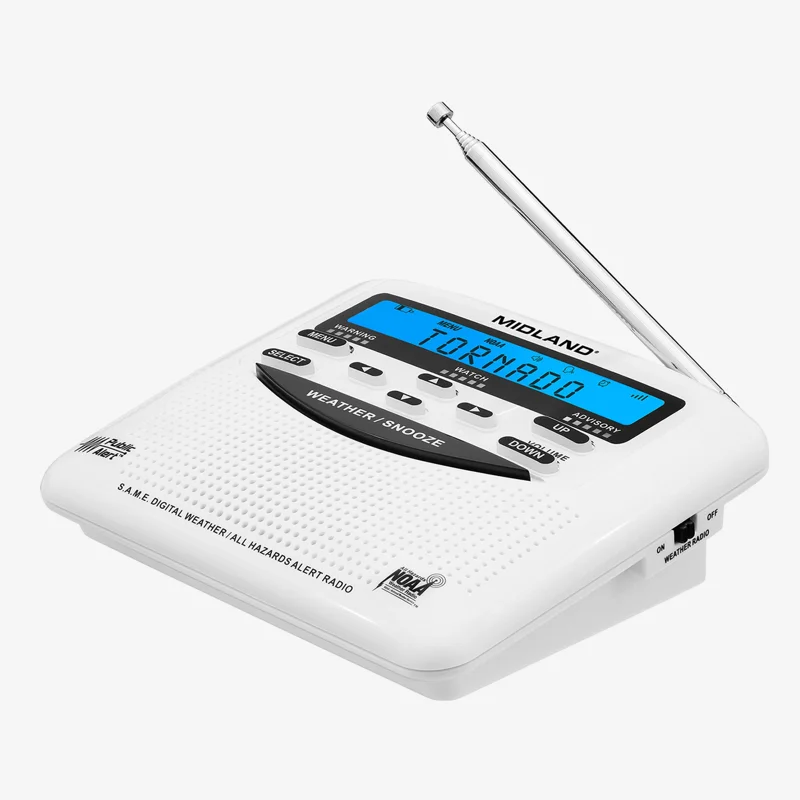
- 1Best bedside alert radioMidland WR120B NOAA Weather Alert RadioView at MidlandRead our analysis
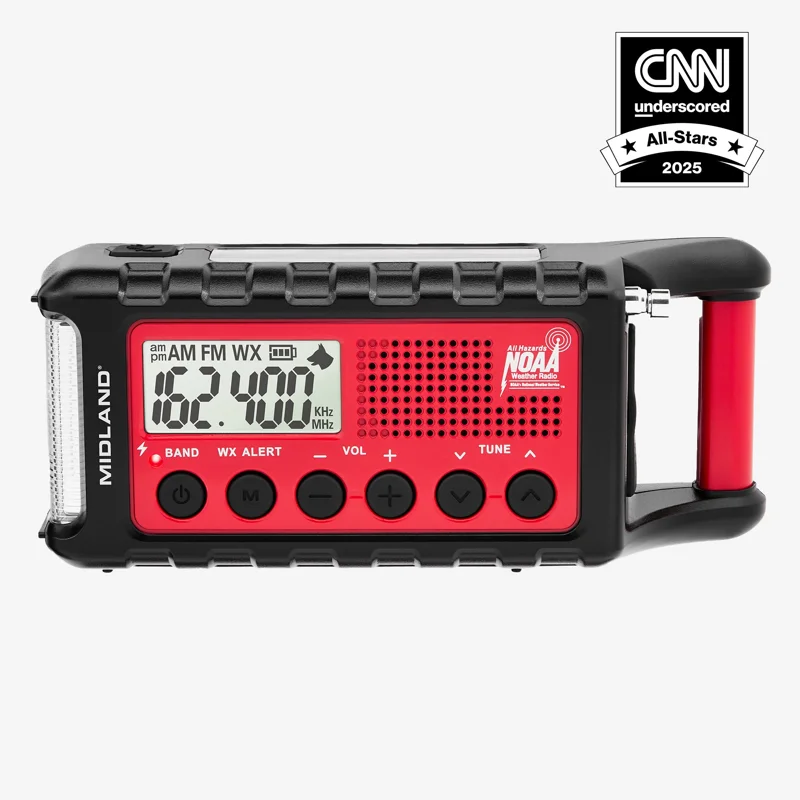
- 2Best crank weather radioMidland ER310 Emergency Crank RadioView at MidlandRead our analysis
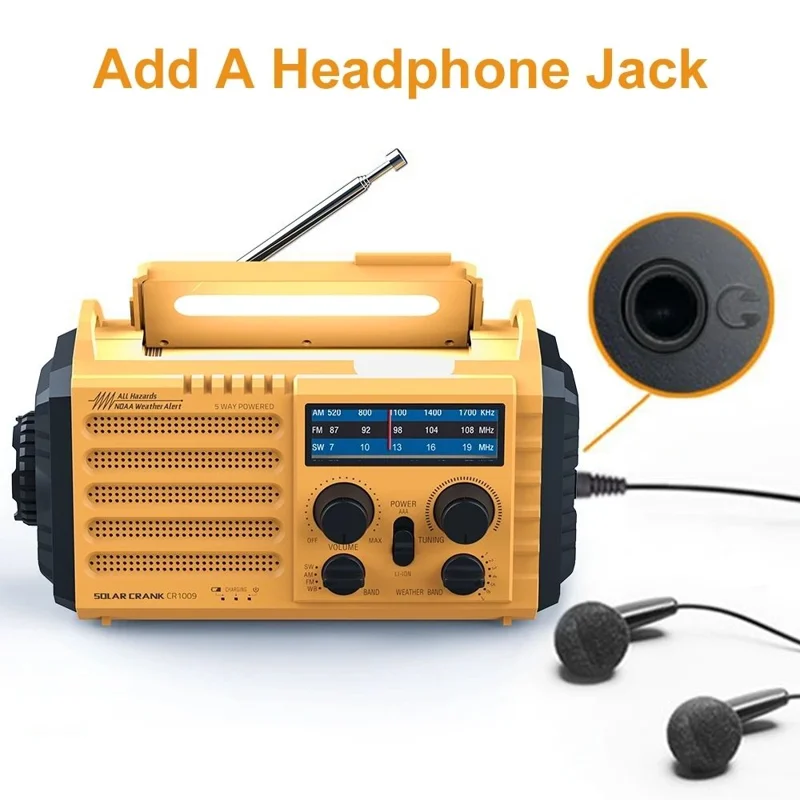
- 3Best alert scanning on a crank radioRaynic CR1009 Emergency Weather RadioView at RaynicRead our analysis
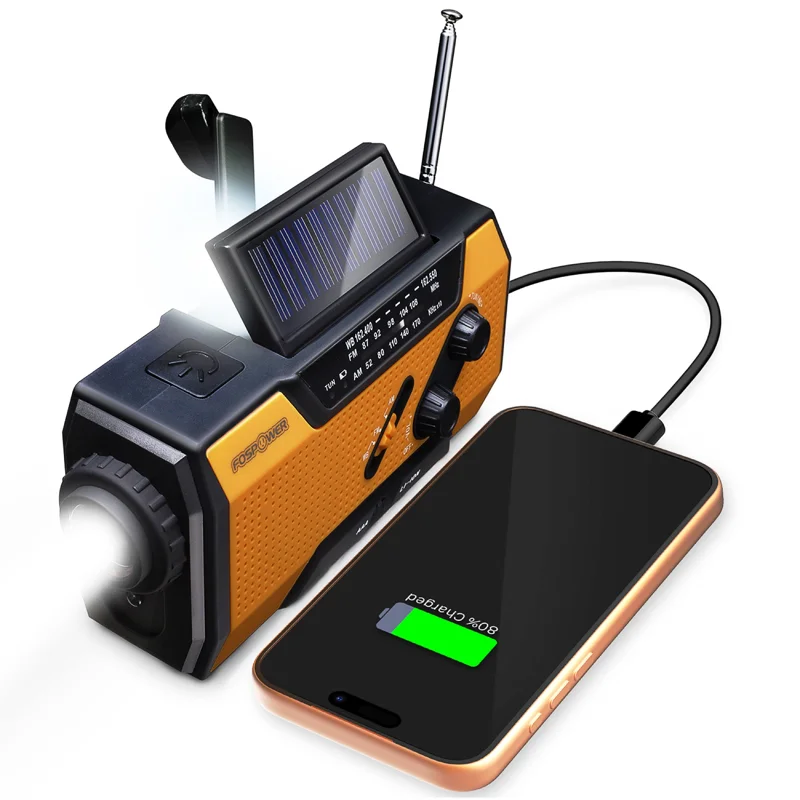
- 4Best small weather radio for a go-bagFosPower A1 Emergency Weather RadioView at FosPowerRead our analysis
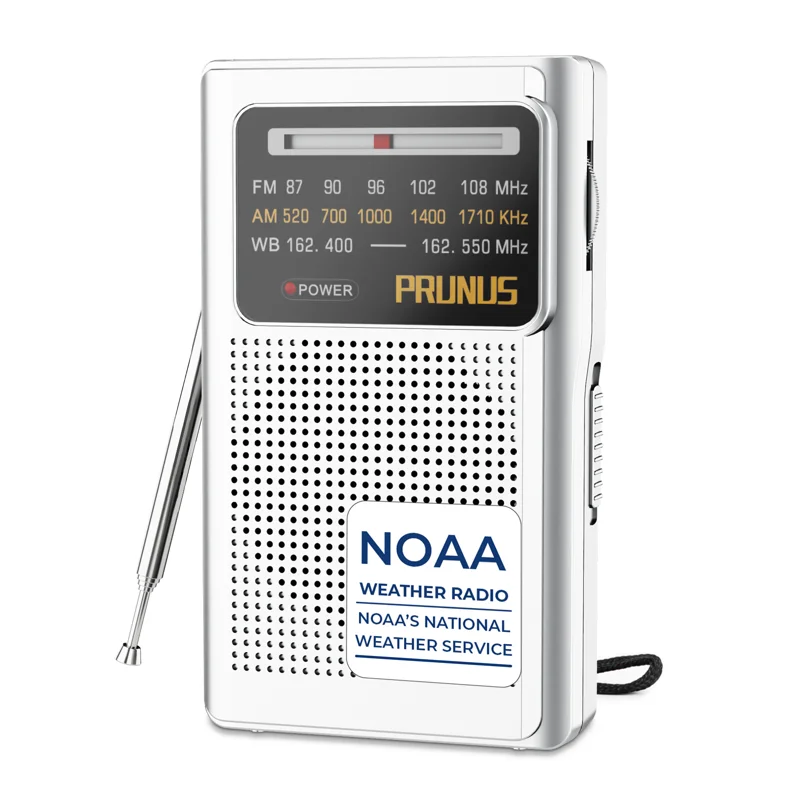
- 5Best plain battery weather radioPRUNUS J161 NOAA Weather RadioView at PRUNUSRead our analysis
The best weather radio is the one that tells you about a warning in time to act. For a storm at 3 a.m., that means a radio that can wake you. For a three-day outage, it means one that keeps running with no power. Few radios do both jobs well, so this guide sorts five picks by the job they do best.
#1. Midland WR120B: best bedside alert radio
Midland WR120B NOAA Weather Alert Radio
Our verdict:
Best bedside alert radio
Best for homes in areas with tornadoes, flash floods or other hazards that can strike at night.
View at MidlandKeep in mind: it runs from the wall with battery backup. It has no crank, so it is not a kit radio.
#2. Midland ER310: best crank weather radio
Midland ER310 Emergency Crank Radio
Our verdict:
Best crank weather radio
Best for a long outage with no power to recharge.
View at MidlandKeep in mind: it is not a SAME alert radio for your nightstand.
#3. Raynic 5000mAh Radio: best alert scanning on a crank radio
Raynic CR1009 Emergency Weather Radio
Our verdict:
Best alert scanning on a crank radio
Best for people who want one radio that can stand by for alerts and also run without power.
View at RaynicKeep in mind: check how long standby lasts on battery. A plug-in alert radio is still the safer bedside choice.
#4. FosPower A1: best small weather radio for a go-bag
FosPower A1 Emergency Weather Radio
Our verdict:
Best small weather radio for a go-bag
Best for a go-bag or car kit.
View at FosPowerKeep in mind: the speaker is small. It suits news checks, not loud alarms.
#5. PRUNUS J161: best plain battery weather radio
PRUNUS J161 NOAA Weather Radio
Our verdict:
Best plain battery weather radio
Best for older adults or anyone who wants simple knobs.
View at PRUNUSKeep in mind: no crank, no solar and no alert mode. Keep spare batteries with it.
Factors to consider when choosing a weather radio
Alert radio or crank radio
An alert radio sits quietly and turns on when the National Weather Service sends a warning. That is the feature that saves time at night. A crank radio is for listening once you know something is happening, and for keeping going when the power is out for days. Most homes are best served by one of each.
SAME county coding
SAME stands for Specific Area Message Encoding. You enter your county code, and the radio sounds only for alerts that cover that county. Without it, a radio may alarm for a whole region. Find your code on the NWS county coverage page.
Power
A bedside alert radio should have battery backup, so it still works when the power goes out in a storm. A kit radio should have at least two power sources, such as a crank and batteries.
Reception
NOAA Weather Radio uses VHF signals from local transmitters. Reception depends on distance and terrain. Before you rely on a radio, check that it picks up your nearest station clearly. The NOAA radio frequency guide explains how to find it.
How we picked the best weather radios
Every pick receives the seven NOAA Weather Radio channels. We weighed alert features, power options and ease of use. Check the current page before you buy. We favored radios that are easy to use in the dark and under stress, with clear controls and a loud speaker. We also left out radios whose listings did not show the NOAA weather band.
Setting up your weather radio
- Find your station. Use the NWS station list to find the transmitter and channel nearest you.
- Enter your SAME codes. Add your county, plus nearby counties you travel to or that warn you early.
- Choose alert types. Many radios let you turn off lower-level alerts. Keep warnings on.
- Place it well. Put the alert radio where everyone can hear it, near a window if reception is weak.
- Test it weekly. The NWS weekly test is a good check that it still works.
Where a weather radio fits in your plan
A weather radio gives you warning. Your plan tells you what to do with it. Pair the radio with a written family plan and a kit. The emergency radio hub compares all six radios we cover, and the hand crank radio guide goes deeper on outage radios.
Questions people also ask
What is the best weather radio for home use?
For home use, an alert radio with SAME county coding is the one that can wake you at night. The Midland WR120B is a common pick for that job.
Do weather radios work without internet or cell service?
Yes. They pick up NOAA Weather Radio broadcasts over the air, so they keep working when cell networks and internet are down, as long as the radio has power.
How do I set up a SAME weather radio?
Look up your county's SAME code on the National Weather Service county coverage page, then enter it in the radio. Most alert radios take several county codes.
How often do weather radios test?
The National Weather Service sends a required weekly test on most transmitters. It is a good time to check that your radio still receives a signal.