
4 Emergency Kit for Earthquake Essentials to Buy First in 2026
As an Amazon Associate, this website earns from qualifying purchases.
The short answer
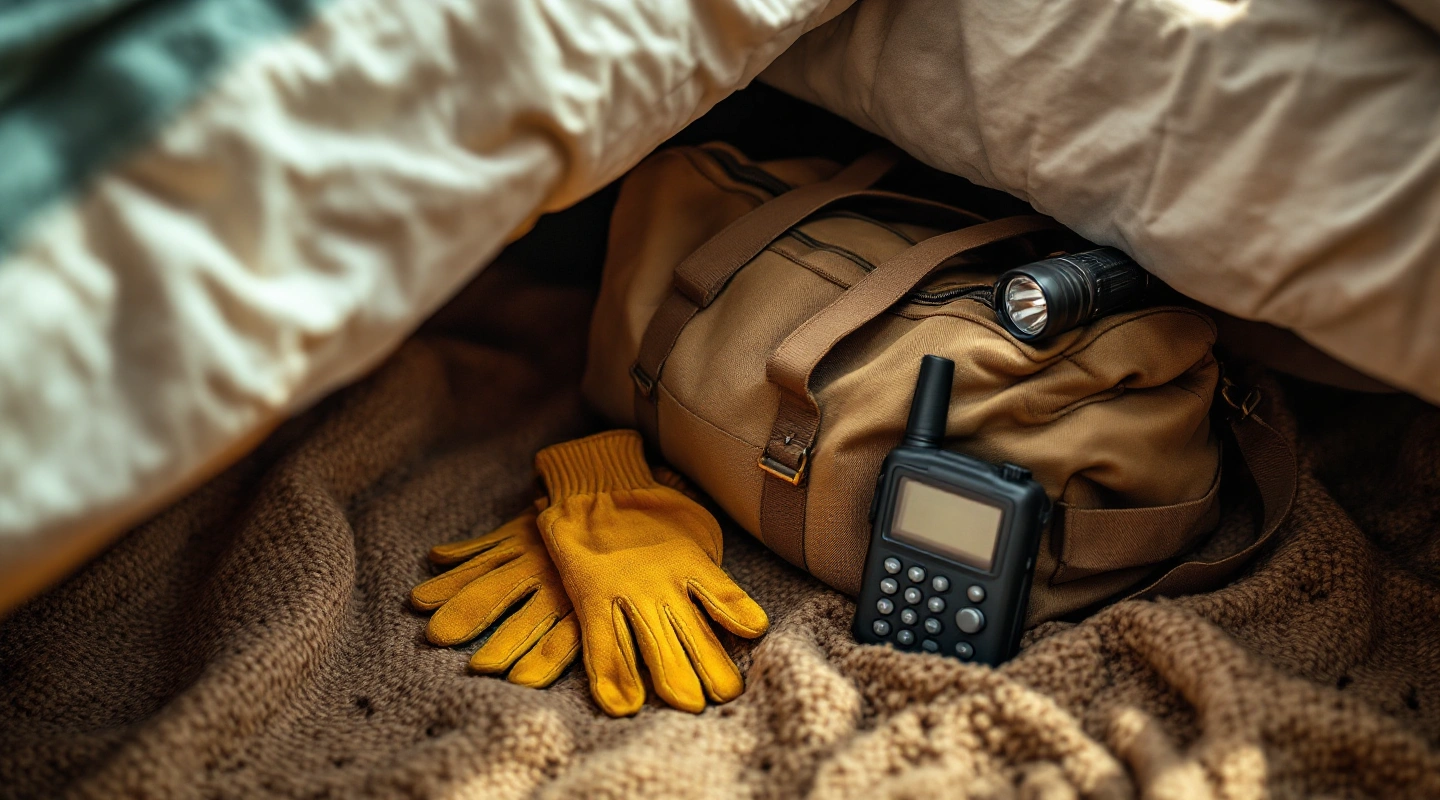
Keep a small kit somewhere you can reach it even if you can't walk through the house, such as under a bed or by an exterior door.
Last updated September 2026
Contents12
- #1. Ready America 4-Person 72-Hour Kit: best overall starting point
- #2. RunningSnail Hand Crank Radio: best for staying informed
- #3. Mylar Emergency Blankets (4-Pack): best for staying warm
- #4. LifeStraw Personal Water Filter: best for making water safe to drink
- Factors to consider when building an emergency kit for earthquake
- How we picked this emergency kit for earthquake list
- A note on pets and older family members
- Checking your kit twice a year
- Official emergency kit for earthquake sources
- More in this guide
- More Plainly Prepared guides
- Dated events for household planning
Our top 4 picks
- 1Best overall starting point
 Ready America 4-Person 72-Hour Deluxe Kit
- Four 2,400-calorie food bars and four 1-liter water cartons
- 107-piece first aid kit, blankets, ponchos and light sticks
- Hand-crank light, AM/FM radio and phone charger unit
- 2Best for staying informed
 RunningSnail Hand Crank Radio
- NOAA weather alerts plus AM/FM
- Hand crank, solar panel or built-in 2000mAh battery
- Doubles as a USB phone charger and flashlight
- 3Best for staying warm
 Mylar Emergency Blankets (4-pack)
- Each unfolds to 82 x 52 inches
- Fold down small for a go-bag or car kit
- Tear-resistant and reusable
- 4Best for making water safe to drink
 LifeStraw Personal Water Filter
- Drink straight through it; no power or chemicals
- Maker lists removal of bacteria and parasites
- Listed life of about 1,000 gallons
Building an emergency kit for earthquake risk starts from your regular kit. Then it fixes the one thing a regular kit gets wrong: where you keep it. A kit in a hall closet does no good if a fallen bookcase blocks that hallway.
This matters most in places prone to shaking, like California and the Pacific Northwest. But the rule below works for any household, in any state. A jammed hallway can happen after other events too, not just a quake.
#1. Ready America 4-Person 72-Hour Kit: best overall starting point
Ready America 4-Person 72-Hour Deluxe Kit
Our verdict:
Best overall starting point
Best for households that want a working kit fast, without sourcing each item on their own.
View on Amazon- Four 2,400-calorie food bars and four 1-liter water cartons
- 107-piece first aid kit, blankets, ponchos and light sticks
- Hand-crank light, AM/FM radio and phone charger unit
Keep in mind: pre-made kits rarely match your household size exactly. Plan to add extra water and any medications by hand.
Product details checked September 2026
A pre-assembled kit built for under-bed or closet storage solves a problem earthquakes create. You may not be able to walk through the house to reach your main supplies.
Standout: pre-assembled kits usually already include a flashlight, basic first aid, and tools for cutting or prying, in one bag. Compare options in our emergency preparedness products guide.
#2. RunningSnail Hand Crank Radio: best for staying informed
Our verdict:
Best for staying informed
Best for anyone who wants official updates without depending on cell service.
View on Amazon- NOAA weather alerts plus AM/FM
- Hand crank, solar panel or built-in 2000mAh battery
- Doubles as a USB phone charger and flashlight
Keep in mind: the smallest crank radios put out a weak signal indoors. Keep the radio near a window if reception is weak.
Product details checked September 2026
A radio that runs on a hand crank, solar panel, or batteries keeps you connected to local news. It works even when cell towers and power are down.
Standout: dual-power models cover you either way. Crank power never runs out. Battery power is quieter to use overnight. Compare options in our hand crank radio picks.
#3. Mylar Emergency Blankets (4-Pack): best for staying warm
Mylar Emergency Blankets (4-pack)
Our verdict:
Best for staying warm
Best for any kit that does not already have a way to stay warm without a full sleeping bag.
View on Amazon- Each unfolds to 82 x 52 inches
- Fold down small for a go-bag or car kit
- Tear-resistant and reusable
Keep in mind: these blankets trap heat but are not a substitute for real shelter in a long, cold wait.
Product details checked September 2026
If your household ends up outside or in a car after an aftershock, a compact thermal blanket does a lot of work for very little space in a kit.
Standout: a set of several blankets means everyone in the household gets one, not just the first person to reach the bag. Compare options in our emergency preparedness products guide.
#4. LifeStraw Personal Water Filter: best for making water safe to drink
LifeStraw Personal Water Filter
Our verdict:
Best for making water safe to drink
Best for households that want a plan beyond stored bottled water alone.
View on Amazon- Drink straight through it; no power or chemicals
- Maker lists removal of bacteria and parasites
- Listed life of about 1,000 gallons
Keep in mind: it filters water you already have access to. It does not create water, so it is a backup to storage, not a replacement for it.
Product details checked September 2026
A broken water main or a boil-water notice is a common earthquake side effect. A small personal filter is a backup when your stored water runs out.
Standout: a straw-style filter takes almost no space in a kit and needs no batteries or power. Compare options in our portable water filter picks.
Factors to consider when building an emergency kit for earthquake
Placement matters more than brand.
An earthquake survival kit is not really a different kit from your general one. It uses the same core supplies. It just adds one extra rule: keep a small version somewhere you could reach even if the rest of the house is unsafe to walk through.
Before buying anything, check what your general kit already covers. Water, food, a flashlight, and first aid supplies do not need to be duplicated if your main kit already sits somewhere reachable.
Cost matters too. A household on a tight budget can build most of this list from items already in the house: a battery radio from a drawer, spare blankets from a closet, a water bottle you already own. The type of item matters more than any one brand.
The American Red Cross recommends storing at least one gallon of water per person per day as part of any kit, so check your water storage before adding anything else to the list.
How we picked this emergency kit for earthquake list
We built this list from two free sources. The first is the FEMA build-a-kit checklist. The second is the Ready.gov supply list. Then we checked each item against one test: an earthquake has to make it more urgent than other disasters do. That test points to placement, staying warm if you are stuck outside, and having a way to make water safe if your supply is compromised.
We did not physically test these picks. Each one is a product type, and each links to our roundup where we compare real products. We cut anything built for a multi-week event, since that is a separate kit from the one you keep by the bed.
A note on pets and older family members
A kit built only for fit adults misses two groups worth planning for by name. Pets need their own small supply: a few days of food, a fold-up bowl, and a copy of shot records kept alongside your other papers. Ready.gov notes that many public shelters and hotels do not allow pets inside, so plan a pet-friendly place to stay.
Older family members, or anyone who has trouble moving fast, need their kit checked for reach, not just for what is inside it. Test it directly. Have each person try to reach and open the kit alone, with no help. Move the kit if anyone struggles.
Checking your kit twice a year
A kit is only useful if it still works when you need it. Check it twice a year, ideally at the spring and fall time changes, since that is already when most people check smoke detector batteries.
- Swap batteries in the radio and any flashlights, even if they look fine.
- Check food and water dates, and rotate anything close to expiring.
- Try on boots and gloves again if kids are in the household. Feet and hands grow fast.
- Re-read any documents you keep with the kit and add anything new, like an updated insurance policy or a new prescription list.
This same check is a good moment to test whether everyone in the house can still reach and open the kit alone. A kit that made sense last year may not fit a home that has since been rearranged.
Official emergency kit for earthquake sources
The supply basics here follow Ready.gov's build-a-kit list. Ready.gov's earthquake page covers what to do before and during the shaking, and after it stops, and the USGS Earthquake Hazards Program tracks quakes and hazard maps.
More in this guide
- What to Do During an Earthquake: the full before/during/after readiness guide.
- What to Do in an Earthquake: the room-by-room, situation-by-situation response.
More Plainly Prepared guides
- Evacuation and family plans
- Emergency hurricane kit
- Rain water barrels and water storage
- Emergency radios
- Car kit emergency supplies
Dated events for household planning
Use a documented event to test the plan against a real place and hazard. The tables link each event to its agency record or research source:
Questions people also ask
What should be in an emergency kit for earthquake use specifically?
Start with your general kit, then add a way to get information once power is out, like a crank radio, plus a way to stay warm and a way to make water safe. Keep a small version somewhere reachable even if you cannot walk through the house.
How much should I spend on an earthquake kit?
There is no fixed number. A household can build one from items already owned or buy a pre-made kit for convenience. The FEMA and Ready.gov checklists are free and are the best starting point before you buy anything.
Where should I store my earthquake kit?
Somewhere reachable even if the rest of the house is unsafe to move through, such as under a bed or next to an exterior door. A kit locked in a garage or a far closet defeats the purpose.
Is a pre-made kit better than building my own?
A pre-made kit saves time and covers the basics fast. Building your own lets you match supplies to your household size and skip items you already own. Many households do both.
Do I need a separate kit for each family member?
Not necessarily, but the plan should note what each person grabs, including medications and glasses. A single household kit works fine as long as everyone knows where it is.