
6 Portable Water Filter Picks for Emergencies and Trips in 2026
As an Amazon Associate, this website earns from qualifying purchases.
The short answer
A portable water filter is a strong backup for stored water. Most do not remove viruses or chemicals, so the CDC advises adding a disinfectant after filtering when you are unsure of the source.
Last updated September 2026
Contents14
- #1. Sawyer Squeeze: best all-round portable water filter
- #2. LifeStraw Personal Filter: best simple straw filter
- #3. Sawyer Mini: best compact squeeze filter
- #4. Survivor Filter PRO: best pump filter
- #5. Filter Straws 5-Pack: best for a whole family's go-bags
- #6. Waterdrop Gravity Straw and Bag: best hands-free option
- Factors to consider when choosing a portable water filter
- How we picked these portable water filters
- What a portable water filter can and cannot do
- How to use a portable water filter safely
- Portable water filter types compared
- Caring for a portable water filter
- Who can skip a portable water filter
- Where a portable filter fits in your plan
Our top 6 picks
- 1Best all-round portable water filter
 Sawyer Squeeze Water Filter
- 0.1-micron absolute filter, about 2 ounces
- Two 32-ounce squeeze pouches included
- Fits 28 mm bottles and works in a gravity setup
- 2Best simple straw filter
 LifeStraw Personal Water Filter
- Drink straight through it; no power or chemicals
- Maker lists removal of bacteria and parasites
- Listed life of about 1,000 gallons
- 3Best compact squeeze filter
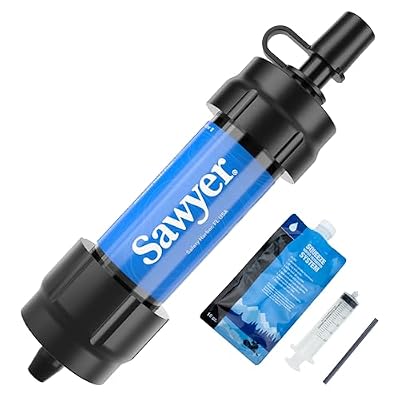 Sawyer Mini Water Filter
- 0.1-micron absolute inline filter, about 2 ounces
- Use as a straw, on the pouch or on a 28 mm bottle
- Comes with a pouch, straw and cleaning plunger
- 4Best pump filter
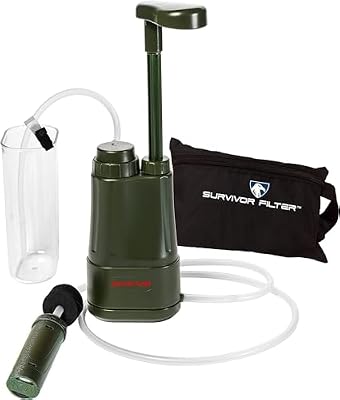 Survivor Filter PRO Pump Filter
- Hand pump with a listed flow of 500 ml per minute
- Three stages, including a 0.01-micron ultra filter
- Maker lists NSF/ANSI-standard testing
- 5Best for a whole family's go-bags
 Practical Survival Filter Straws (5-pack)
- Five straw filters at about 2 ounces each
- Listed life of up to 1,800 gallons per filter
- Maker lists removal of bacteria and parasites
- 6Best hands-free option
 Waterdrop Gravity Filter Straw and Bag
- 0.1-micron ultrafiltration straw with a 1.5-gallon hanging bag
- Listed life of up to 1,400 gallons
- Backwash to clean the filter
A portable water filter turns water from a tap or stream, or even a rain barrel, into water that is much safer to drink, with no power needed. It is a strong backup for any emergency plan. It also has limits that matter a lot in a disaster, when water can carry more than germs. This guide covers how portable filters work, what the CDC says about them, and six picks.
#1. Sawyer Squeeze: best all-round portable water filter
Our verdict:
Best all-round portable water filter
Best for a household go-bag or a camping kit.
View on Amazon- 0.1-micron absolute filter, about 2 ounces
- Two 32-ounce squeeze pouches included
- Fits 28 mm bottles and works in a gravity setup
Keep in mind: squeezing takes effort for large amounts. It does not remove viruses or chemicals.
Product details checked September 2026
#2. LifeStraw Personal Filter: best simple straw filter
LifeStraw Personal Water Filter
Our verdict:
Best simple straw filter
Best for one person, with no setup at all.
View on Amazon- Drink straight through it; no power or chemicals
- Maker lists removal of bacteria and parasites
- Listed life of about 1,000 gallons
Keep in mind: you cannot fill a pot or a bottle with it, only drink through it.
Product details checked September 2026
#3. Sawyer Mini: best compact squeeze filter
- 0.1-micron absolute inline filter, about 2 ounces
- Use as a straw, on the pouch or on a 28 mm bottle
- Comes with a pouch, straw and cleaning plunger
Keep in mind: flow is slower than the full Squeeze.
Product details checked September 2026
#4. Survivor Filter PRO: best pump filter
Survivor Filter PRO Pump Filter
Our verdict:
Best pump filter
Best for filling bottles quickly from a shallow source.
View on Amazon- Hand pump with a listed flow of 500 ml per minute
- Three stages, including a 0.01-micron ultra filter
- Maker lists NSF/ANSI-standard testing
Keep in mind: at 12.8 ounces it is heavier than a straw. Given the CDC's warning on viruses, check how its claims were tested, and add a disinfectant when unsure.
Product details checked September 2026
#5. Filter Straws 5-Pack: best for a whole family's go-bags
Practical Survival Filter Straws (5-pack)
Our verdict:
Best for a whole family's go-bags
Best for giving each person their own filter.
View on Amazon- Five straw filters at about 2 ounces each
- Listed life of up to 1,800 gallons per filter
- Maker lists removal of bacteria and parasites
Keep in mind: straw-only use, like the LifeStraw.
Product details checked September 2026
#6. Waterdrop Gravity Straw and Bag: best hands-free option
Waterdrop Gravity Filter Straw and Bag
Our verdict:
Best hands-free option
Best for filtering a few liters at once without squeezing.
View on Amazon- 0.1-micron ultrafiltration straw with a 1.5-gallon hanging bag
- Listed life of up to 1,400 gallons
- Backwash to clean the filter
Keep in mind: slower than pumping, and you need somewhere to hang it.
Product details checked September 2026
Factors to consider when choosing a portable water filter
- Pore size. Look for a stated absolute pore size of 0.3 micron or smaller.
- Type. Straws are simplest. Squeeze filters fill bottles. Pumps are fastest. Gravity bags are hands-free.
- Capacity. Makers list life in gallons or liters. More is better for a family.
- Cleaning. Backflushing keeps flow up on many hollow fiber filters.
- Freezing. Many hollow fiber makers warn that freezing can damage the filter. Keep it inside a jacket or sleeping bag in cold weather, and follow the maker's guidance.
How we picked these portable water filters
We started from the CDC's guidance on making water safe in an emergency. It sets the pore sizes a filter needs and warns that filters do not remove viruses. We picked filters whose listings state a pore size or removal claims for bacteria and parasites.
We did not test these by hand. Details come from each listing, so check the current page before you buy. We also favored filters that are simple to use under stress, since a complex setup is easy to get wrong when you are tired.
What a portable water filter can and cannot do
The CDC gives clear rules for portable filters:
- Bacteria: the filter needs an absolute pore size of 0.3 micron or smaller.
- Parasites: the filter needs an absolute pore size of 1 micron or smaller.
- Viruses: portable filters will not remove them.
- After filtering: add a chemical disinfectant, such as iodine, chlorine or chlorine dioxide, to the filtered water.
Most filters in this guide list a 0.1 micron pore size, which meets the CDC's size for bacteria and parasites. None of that covers viruses or chemicals. In a flood, water can carry fuel and sewage, plus other pollutants that no small filter can fix.
How to use a portable water filter safely
- Pick the cleanest source you can. Clear, moving water beats still, murky water.
- Let cloudy water settle. The CDC says to let it settle, then draw off the clear water.
- Filter it. Follow the maker's steps, and keep the dirty and clean sides apart.
- Disinfect when unsure. Add a disinfectant after filtering, following the label. The water purification tablets guide compares options.
- Or boil it. The CDC says to bring clear water to a rolling boil for 1 minute, or 3 minutes above 6500 feet.
Portable water filter types compared
Straw filters are the simplest. You put one end in the water and drink. There is nothing to set up. The catch is that you cannot fill a bottle or a pot, so they suit one person on the move.
Squeeze filters screw onto a soft pouch or a bottle. You fill the pouch, then squeeze clean water into a bottle or pot. They fill containers for a family, and many also work as a straw.
Pump filters have a hose you drop into the source. You pump, and clean water comes out the other end. They are the fastest way to fill several bottles from a shallow stream.
Gravity filters hang a bag of dirty water above a clean container. Gravity pulls the water through. They are slower, but hands-free, which helps when you need gallons for a household.
Caring for a portable water filter
A filter only works if it is clean and undamaged. Follow the maker's steps for backflushing or cleaning, and do it often when the water is murky. Keep the clean side away from dirty water, since one drip can undo the filter's work. Label the filter with the date you first used it, so you can track its listed life. Store it dry between uses.
Replace a filter when it reaches its listed life, when it cracks, or when the maker's steps no longer bring back the flow. A damaged filter can let germs through even if water still comes out.
Pack a small spare kit with the filter: a clean bottle, a cloth for pre-straining cloudy water, and a strip of disinfecting tablets. Together they cover the steps the CDC describes, even if one part fails.
If more than one person shares a filter, give each person their own bottle for clean water. Sharing a mouthpiece or a straw can spread germs, even when the water itself is safe.
Test a new filter at home before you pack it. That way you know how it works, how fast it flows, and whether any parts are missing.
Who can skip a portable water filter
If you live in a city with good stored water and no plans to leave home, a filter is a nice extra rather than a must. Stored water, a way to boil, and plain bleach cover most short outages. A filter earns its place when you might need water away from home: in a go-bag, on the road, at camp, or after a long outage when stored water runs low. Households on a private well, or in areas where storms often knock out water service for days, get the most use from one.
Where a portable filter fits in your plan
A filter stretches stored water. It does not replace it.
Ready.gov still calls for at least one gallon per person per day of stored water. Keep a filter in each go-bag and car kit, and a larger gravity filter at home. The best gravity water filter guide covers home units, and the best water purification guide compares every method. For the full water plan, see the rain water barrel hub.
For stored water at home before you need a filter, compare the vertical water storage tank options.
Questions people also ask
Does a portable water filter make any water safe to drink?
No. The CDC says portable filters need a pore size of 0.3 micron or smaller to remove bacteria and 1 micron or smaller for parasites, and they will not remove viruses. Add a disinfectant after filtering when unsure.
What is the difference between a filter and a purifier?
In general use, a filter removes bacteria and parasites, while a purifier also deals with viruses, often by adding a chemical step. Check each product's claims and how they were tested.
How long does a portable water filter last?
It varies a lot by model. Makers list capacity in gallons or liters. Backflushing, when the model allows it, helps keep flow up.
Can a portable water filter remove chemicals?
Most small filters are built for germs and dirt, not chemicals. Some add carbon to reduce taste and odor. Do not rely on a portable filter for water that may contain fuel or chemicals.