
5 Best Gravity Water Filters for Home Backup and Camp in 2026
As an Amazon Associate, this website earns from qualifying purchases.
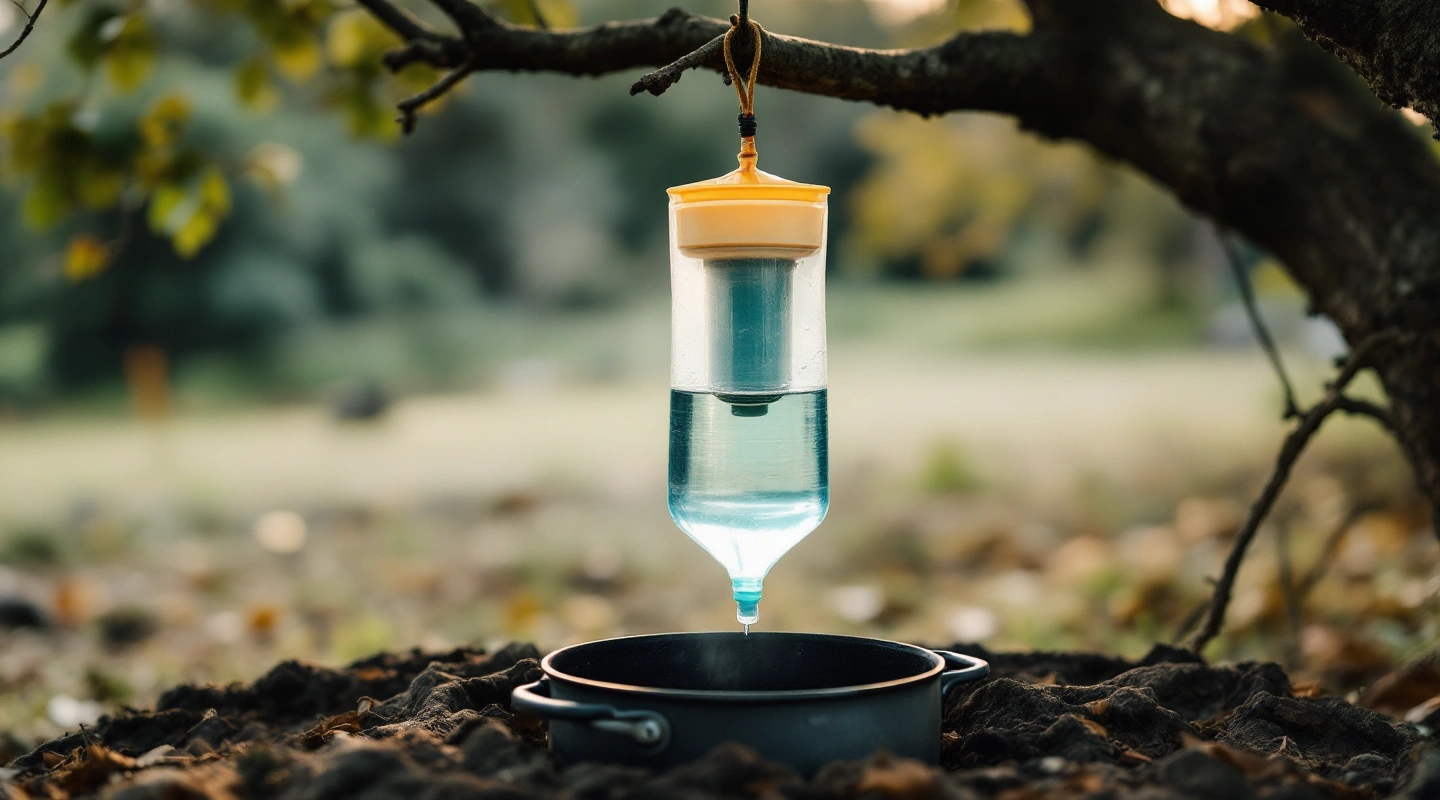
The short answer
The best gravity water filter for home backup is a countertop system you can fill and walk away from. For camp and go-kits, a hanging bag filter does the same job at a fraction of the size.
Last updated September 2026
Contents13
- #1. Purewell 2.25-Gallon Countertop System: best countertop gravity water filter
- #2. Membrane Solutions 6L Gravity Filter: best for groups and base camps
- #3. Waterdrop Gravity Straw and Bag: best light gravity kit
- #4. Yuclet 2-Gallon Gravity Bag: best large hanging bag
- #5. Sawyer Squeeze: best add-on for a DIY gravity setup
- Factors to consider when choosing a gravity water filter
- How we picked the best gravity water filters
- Countertop vs hanging gravity filters
- What a gravity filter does not do
- How much a gravity filter needs to handle
- Caring for a gravity water filter
- Who can skip a gravity water filter
- Using a gravity water filter in an outage
Our top 5 picks
- 1Best countertop gravity water filter
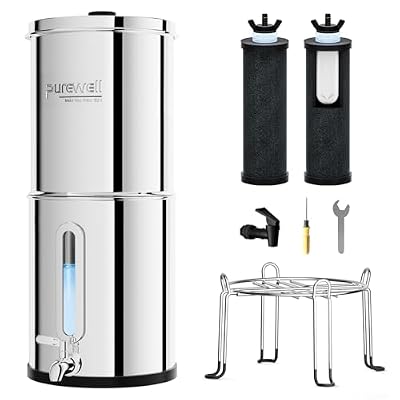 Purewell 2.25-Gallon Gravity Filter
- Stainless steel two-chamber countertop system
- 3-stage filter with a 0.01-micron hollow fiber membrane
- Water level window; no power needed
- 2Best for groups and base camps
 Membrane Solutions 6L Gravity Filter
- 6-liter bag for groups of three to six
- 0.1-micron hollow fiber membrane plus carbon
- Maker lists NSF/ANSI 42, 372 and 401 testing and up to 0.5 L per minute
- 3Best light gravity kit
 Waterdrop Gravity Filter Straw and Bag
- 0.1-micron ultrafiltration straw with a 1.5-gallon hanging bag
- Listed life of up to 1,400 gallons
- Backwash to clean the filter
- 4Best large hanging bag
 Yuclet Gravity Filter with 2-Gallon Bag
- 2-gallon dirty-water bag with a 0.1-micron filter straw
- Listed for up to 1,300 gallons and 600 ml per minute
- Straw also fits 28 mm and 30 mm bottles
- 5Best add-on for a DIY gravity setup
 Sawyer Squeeze Water Filter
- 0.1-micron absolute filter, about 2 ounces
- Two 32-ounce squeeze pouches included
- Fits 28 mm bottles and works in a gravity setup
The best gravity water filter lets you fill it and walk away. That matters in an outage, when you need several gallons a day for a household and have other things to do than squeeze a pouch. Gravity filters come in two shapes: countertop systems for the kitchen, and hanging bags for camp and go-kits. This guide compares both.
#1. Purewell 2.25-Gallon Countertop System: best countertop gravity water filter
Purewell 2.25-Gallon Gravity Filter
Our verdict:
Best countertop gravity water filter
Best for a home kitchen during a long outage or a water problem.
View on Amazon- Stainless steel two-chamber countertop system
- 3-stage filter with a 0.01-micron hollow fiber membrane
- Water level window; no power needed
Keep in mind: it is a countertop unit, not something to carry. Like any filter, it is not a fix for chemical pollution.
Product details checked September 2026
#2. Membrane Solutions 6L Gravity Filter: best for groups and base camps
Membrane Solutions 6L Gravity Filter
Our verdict:
Best for groups and base camps
Best for 3 to 6 people at camp, or a household that wants a hanging option.
View on Amazon- 6-liter bag for groups of three to six
- 0.1-micron hollow fiber membrane plus carbon
- Maker lists NSF/ANSI 42, 372 and 401 testing and up to 0.5 L per minute
Keep in mind: those NSF standards cover taste, lead-free parts and some contaminants. They are not a virus claim.
Product details checked September 2026
#3. Waterdrop Gravity Straw and Bag: best light gravity kit
Waterdrop Gravity Filter Straw and Bag
Our verdict:
Best light gravity kit
Best for a go-bag or car kit.
View on Amazon- 0.1-micron ultrafiltration straw with a 1.5-gallon hanging bag
- Listed life of up to 1,400 gallons
- Backwash to clean the filter
Keep in mind: a smaller bag means more refills.
Product details checked September 2026
#4. Yuclet 2-Gallon Gravity Bag: best large hanging bag
Yuclet Gravity Filter with 2-Gallon Bag
Our verdict:
Best large hanging bag
Best for filling pots and bottles at camp or in a yard.
View on Amazon- 2-gallon dirty-water bag with a 0.1-micron filter straw
- Listed for up to 1,300 gallons and 600 ml per minute
- Straw also fits 28 mm and 30 mm bottles
Keep in mind: you need a branch or a hook to hang it.
Product details checked September 2026
#5. Sawyer Squeeze: best add-on for a DIY gravity setup
Our verdict:
Best add-on for a DIY gravity setup
Best for people who already own buckets or bags.
View on Amazon- 0.1-micron absolute filter, about 2 ounces
- Two 32-ounce squeeze pouches included
- Fits 28 mm bottles and works in a gravity setup
Keep in mind: building your own gravity rig takes parts and care to keep clean and dirty sides apart.
Product details checked September 2026
Factors to consider when choosing a gravity water filter
- Pore size. Look for a stated absolute pore size of 0.3 micron or smaller.
- Tested standards. Check which NSF/ANSI standards are named, and what each one covers.
- Capacity. Big chambers or bags mean fewer refills. For a family, 2 gallons or more helps.
- Flow. Makers list flow in ml per minute. Faster is better for a household.
- Cleaning. Backwash or easy-clean filters keep working longer.
- Filter life. Listed in gallons or liters. Note the date you start using it.
How we picked the best gravity water filters
We started from the CDC's guidance on filters in an emergency. It says a filter needs an absolute pore size of 0.3 micron or smaller to remove bacteria, and 1 micron or smaller for parasites. It also says filters will not remove viruses.
We picked gravity filters whose listings state a pore size at or below those levels, or name the standards they were tested to. We weighed capacity and flow, plus how easy each is to clean. We did not test these by hand. Details come from each listing, so check the current page before you buy.
Countertop vs hanging gravity filters
Countertop systems sit in the kitchen. You fill the top with tap or stored water, and clean water collects below. They are the easiest choice for a household during a long outage, and some double as everyday filters.
Hanging bags fold small. You fill the bag, hang it, and let water run through a filter into a bottle or pot. They suit camp, go-bags and yards.
Many homes do well with one of each: a countertop unit at home, and a bag in the go-kit.
What a gravity filter does not do
A gravity water filter is still a filter. The CDC is clear that filters will not remove viruses. After filtering water you are unsure of, add a chemical disinfectant such as chlorine, iodine or chlorine dioxide, following the label. Or boil it: the CDC says to bring clear water to a rolling boil for 1 minute, or 3 minutes above 6500 feet.
Filters also are not built for fuel or other chemicals. After a flood, water can carry all of these. When in doubt, use stored water. The best water purification guide compares every method.
How much a gravity filter needs to handle
Start from Ready.gov's rule of one gallon per person per day for drinking and basic hygiene. A family of four needs at least 4 gallons a day, and more for cooking and washing, or in hot weather.
That number shapes the filter you need. A small bag filter with a slow flow can keep up for one or two people. A household leaning on filtered water for days needs a bigger chamber or bag, and a steady flow. Check the listed flow rate and chamber size against your daily need before you buy.
Filter life matters too. A filter listed for over 1,000 gallons will last a family a long time at 4 gallons a day. Murky water clogs filters faster, though, so settle or pre-strain it first.
Caring for a gravity water filter
Clean or backflush the filter as the maker directs, most often when flow slows. Rinse the dirty-water bag or chamber, and keep the clean container covered. Let the parts dry before you pack them away. Many hollow fiber makers warn against freezing, so store the filter indoors in winter and follow the maker's guidance.
Mark the clean container so nobody mixes it up with the dirty side. A strip of tape reading "clean" works.
Who can skip a gravity water filter
A single person with a go-bag may do fine with a straw or squeeze filter. A gravity filter pays off for a family that could need several gallons a day, or for homes on a private well that loses power with the pump. If your plan is to store two weeks of water, as the CDC suggests where possible, a gravity filter is a backup for when that store runs out, not a first purchase.
Using a gravity water filter in an outage
- Start with the cleanest water you have. Stored water, tap water under a notice you have treated, or clear rain water.
- Let cloudy water settle first. The CDC says to let it settle, then draw off the clear water.
- Keep dirty and clean sides apart. Do not let the clean container touch dirty water.
- Disinfect when unsure. Add tablets or bleach after filtering, or boil.
- Clean the filter often. Follow the maker's steps.
Ready.gov still calls for storing at least one gallon per person per day. A gravity filter stretches that supply. It does not replace it. See the portable water filter guide for smaller options and the rain water barrel hub for the full water plan.
Questions people also ask
How does a gravity water filter work?
You pour water into an upper chamber or bag, and gravity pulls it down through the filter into a clean container. There is no pumping or squeezing.
Does a gravity water filter remove viruses?
Most do not. The CDC says portable filters will not remove viruses and advises adding a disinfectant after filtering when you are unsure of the water.
How fast is a gravity water filter?
It depends on the filter and how full the upper chamber is. Makers list flow rates, often in milliliters per minute. Clean or backflush the filter to keep flow up.
Is a gravity filter good for tap water during a boil notice?
Follow the notice. Official boil-water advice is to boil water or use bottled water. A filter alone may not be enough if viruses are a concern.