
6 Best Water Purification Picks for Emergencies, Methods Compared in 2026
As an Amazon Associate, this website earns from qualifying purchases.
The short answer
The best water purification for most emergencies is two steps: filter or settle the water, then disinfect it by boiling, bleach or tablets. No single gadget covers every germ and chemical.
Last updated September 2026
Contents15
- #1. Sawyer Squeeze: best filter for go-bags and camp
- #2. Purewell Countertop Gravity System: best home filter for an outage
- #3. Aquatabs 49mg Tablets: best light chemical backup
- #4. LifeStraw Personal Filter: best simple straw
- #5. Survivor Filter PRO: best pump filter
- #6. Potable Aqua with PA Plus: best iodine option
- Factors to consider when choosing water purification
- How we picked these water purification products
- Best water purification methods compared
- Which method fits which water
- Water purification for a household in an outage
- Water purification on the move
- Keeping purification gear ready
- Common water purification mistakes
- Purification is a backup, not a supply
Our top 6 picks
- 1Best filter for go-bags and camp
 Sawyer Squeeze Water Filter
- 0.1-micron absolute filter, about 2 ounces
- Two 32-ounce squeeze pouches included
- Fits 28 mm bottles and works in a gravity setup
- 2Best home filter for an outage
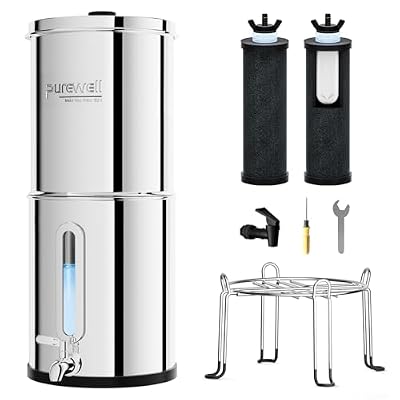 Purewell 2.25-Gallon Gravity Filter
- Stainless steel two-chamber countertop system
- 3-stage filter with a 0.01-micron hollow fiber membrane
- Water level window; no power needed
- 3Best light chemical backup
 Aquatabs 49mg Purification Tablets (30-pack)
- One tablet treats 0.75 to 2 liters
- EPA registered and certified to NSF/ANSI 60
- No iodine taste or color
- 4Best simple straw
 LifeStraw Personal Water Filter
- Drink straight through it; no power or chemicals
- Maker lists removal of bacteria and parasites
- Listed life of about 1,000 gallons
- 5Best pump filter
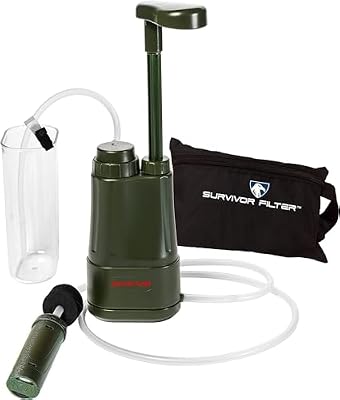 Survivor Filter PRO Pump Filter
- Hand pump with a listed flow of 500 ml per minute
- Three stages, including a 0.01-micron ultra filter
- Maker lists NSF/ANSI-standard testing
- 6Best iodine option
 Potable Aqua Tablets with PA Plus
- One bottle of 50 tablets plus one of 50 PA Plus
- PA Plus removes the iodine taste and color when used as directed
- Maker lists effectiveness against bacteria and Giardia
The best water purification method is the one that fits the water in front of you. Clear tap water after a boil notice needs something different from murky flood water or a mountain stream. No single product handles every germ and every chemical. This guide compares the main methods using CDC and Ready.gov guidance, then lists six products that make each method easier.
#1. Sawyer Squeeze: best filter for go-bags and camp
Our verdict:
Best filter for go-bags and camp
Best for filling bottles from a tap, rain barrel or stream.
View on Amazon- 0.1-micron absolute filter, about 2 ounces
- Two 32-ounce squeeze pouches included
- Fits 28 mm bottles and works in a gravity setup
Keep in mind: no virus or chemical removal. Add a disinfectant when unsure.
Product details checked September 2026
#2. Purewell Countertop Gravity System: best home filter for an outage
Purewell 2.25-Gallon Gravity Filter
Our verdict:
Best home filter for an outage
Best for a household that needs gallons a day without pumping.
View on Amazon- Stainless steel two-chamber countertop system
- 3-stage filter with a 0.01-micron hollow fiber membrane
- Water level window; no power needed
Keep in mind: it stays on the counter.
Product details checked September 2026
#3. Aquatabs 49mg Tablets: best light chemical backup
Aquatabs 49mg Purification Tablets (30-pack)
Our verdict:
Best light chemical backup
Best for every go-bag and car kit.
View on Amazon- One tablet treats 0.75 to 2 liters
- EPA registered and certified to NSF/ANSI 60
- No iodine taste or color
Keep in mind: chlorine is not the CDC's pick for Cryptosporidium. Filter first if that is a concern.
Product details checked September 2026
#4. LifeStraw Personal Filter: best simple straw
LifeStraw Personal Water Filter
Our verdict:
Best simple straw
Best for one person, drinking straight from a source.
View on Amazon- Drink straight through it; no power or chemicals
- Maker lists removal of bacteria and parasites
- Listed life of about 1,000 gallons
Keep in mind: you can only drink through it, not fill a pot.
Product details checked September 2026
#5. Survivor Filter PRO: best pump filter
Survivor Filter PRO Pump Filter
Our verdict:
Best pump filter
Best for filling bottles fast from shallow water.
View on Amazon- Hand pump with a listed flow of 500 ml per minute
- Three stages, including a 0.01-micron ultra filter
- Maker lists NSF/ANSI-standard testing
Keep in mind: heavier than straws. Check how its virus claim was tested before you rely on it.
Product details checked September 2026
#6. Potable Aqua with PA Plus: best iodine option
Potable Aqua Tablets with PA Plus
Our verdict:
Best iodine option
Best for people who prefer iodine and want less aftertaste.
View on Amazon- One bottle of 50 tablets plus one of 50 PA Plus
- PA Plus removes the iodine taste and color when used as directed
- Maker lists effectiveness against bacteria and Giardia
Keep in mind: the CDC says iodine will not kill Cryptosporidium.
Product details checked September 2026
Factors to consider when choosing water purification
- Build two steps. A filter plus tablets covers more than either one alone.
- Match the size. Straws and squeeze filters for one person. Gravity systems for a family.
- Check claims. Look for a stated absolute pore size, and for EPA registration on tablets.
- Store extras. Keep spare tablets and a fresh bottle of plain bleach.
- Practice once. Try your filter and tablets before an emergency, so you know the steps.
How we picked these water purification products
We started from the CDC's guidance on making water safe in an emergency and Ready.gov's water page. Together they set out the main home methods, from boiling and bleach to distillation.
We picked products for the filter and tablet steps, since boiling and bleach need only a pot and a bottle. We did not test these by hand. Details come from each listing, so check the current page before you buy. We also favored products a tired, stressed person can use without mistakes.
Best water purification methods compared
Boiling
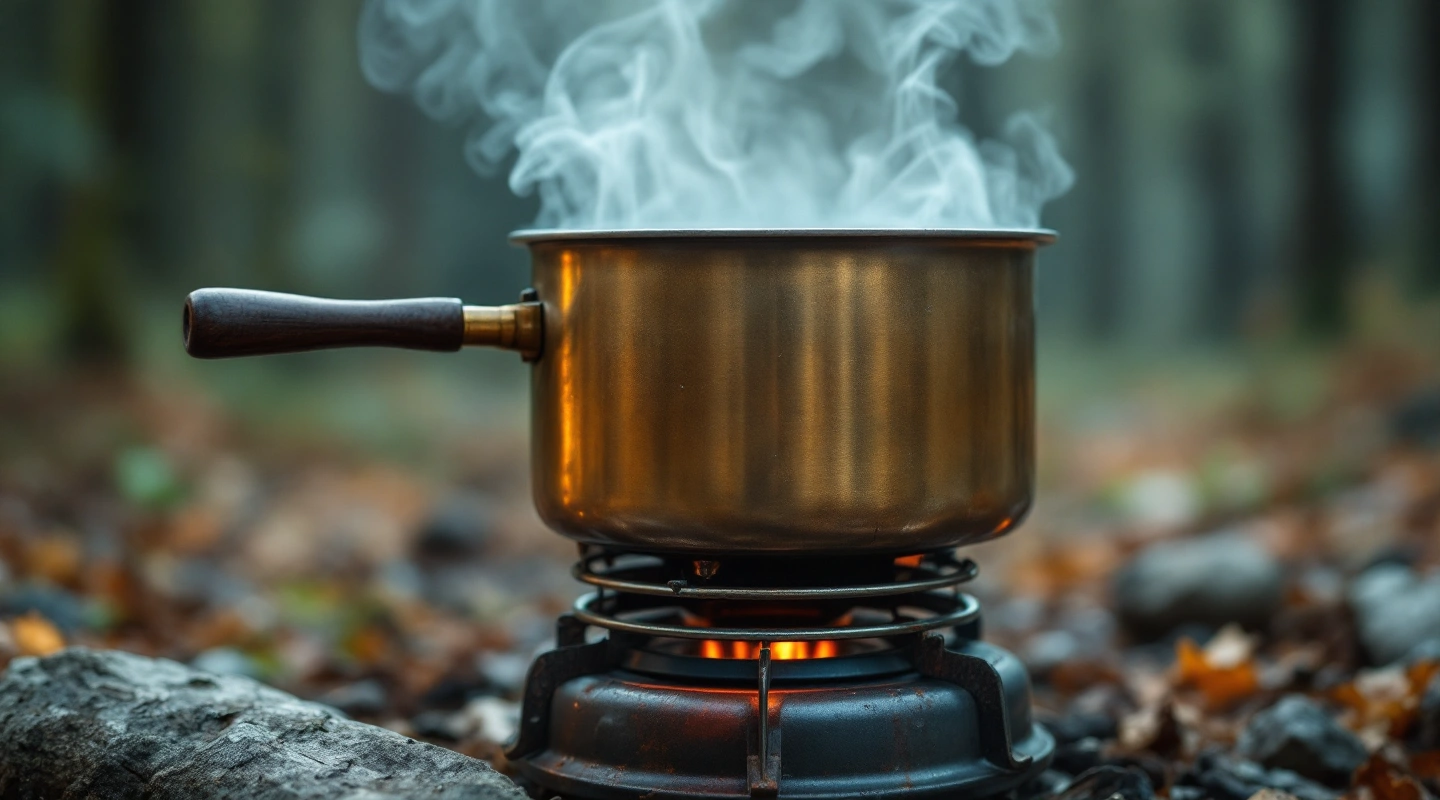
The CDC says to bring clear water to a rolling boil for 1 minute. Above 6500 feet, boil for 3 minutes. Let it cool and store it in a clean, covered container.
- Good for: germs of all kinds, including viruses.
- Not for: chemicals.
- Needs: fuel, a pot and a safe place to cook. Never run a camp stove or grill indoors.
Bleach
The CDC says to add 8 drops of plain, unscented 5 to 9 percent bleach per gallon of clear water. Double it for cloudy, colored or very cold water. Stir and wait at least 30 minutes. Ready.gov gives the same dose as 1/8 teaspoon per gallon, and warns against scented, color-safe or cleaner-added bleach.
- Good for: most bacteria and viruses.
- Weak against: some parasites, such as Cryptosporidium.
- Needs: fresh bleach and a dropper.
Tablets
The CDC says to follow the label on any disinfecting tablet, whether chlorine dioxide, plain chlorine, or iodine. Iodine will not kill Cryptosporidium. Chlorine dioxide tablets will, if you follow the directions. The best water purification tablets guide compares options.
- Good for: travel and go-bags.
- Needs: the right dose for the amount of water, and waiting time.
Filters
The CDC says a filter needs an absolute pore size of 0.3 micron or smaller for bacteria, and 1 micron or smaller for parasites. Filters will not remove viruses. After filtering, add a disinfectant. The portable water filter guide and the best gravity water filter guide compare types.
- Good for: bacteria and parasites, plus dirt.
- Not for: viruses or chemicals on their own.
Distillation
Ready.gov describes distillation: fill a pot halfway with water, tie a cup to the pot lid's handle so it hangs right-side-up inside when the lid is upside down, and boil for 20 minutes. The water that drips into the cup is distilled.
- Good for: germs, and also heavy metals and salts, per Ready.gov.
- Needs: lots of fuel and time for a small amount of water.
Which method fits which water
- Clear tap water under a boil notice: follow the notice. Boil, or use bottled or stored water.
- Clear rain barrel or stream water: filter, then disinfect. Or boil.
- Cloudy water: let it settle first, then draw off the clear water, as the CDC advises. Then filter and disinfect, or boil.
- Flood water or water that may hold fuel or chemicals: do not drink it. Use stored water. Home methods do not reliably remove chemicals, except distillation for some.
Water purification for a household in an outage
A long outage or a broken water main can leave a household without safe tap water for days. Here is a simple routine that uses the methods above.
- Use stored water first. It is already safe, and it saves fuel and effort.
- Keep treated and untreated water apart. Mark containers clearly, such as "treated" and "not treated", so nobody grabs the wrong one.
- Treat a day's water at a time. Pick one time each day to boil or treat enough for the next day.
- Use the cleanest source you can reach. Tap water under a boil notice, or water from a filled bathtub or clear rain barrel, is better than water from a ditch.
- Use lower-grade water for other jobs. Untreated rain barrel water can flush toilets and wash floors.
If you boil, let the water cool in a covered pot. Pouring it back and forth between two clean containers can improve the flat taste. Never run a camp stove or generator indoors. Ready.gov says generators and fuel belong outdoors, at least 20 feet from windows and doors.
Water purification on the move
When you leave home, you lose the stove and the bleach bottle. That is where light gear earns its place. A squeeze or straw filter plus a strip of tablets weighs a few ounces and treats water from most clear sources. Pack both in every go-bag, and add a small pot if you have room, so boiling stays an option at a shelter or campsite.
At a shelter or a friend's home, ask whether the tap water is under a boil notice before you drink it. Local officials post these notices, and they tell you exactly what to do. When no notice is in place and the tap runs, that water is usually the best source you have.
For a vehicle, keep a filter, a strip of tablets and a few liters of stored water in the trunk kit. The car kit emergency supplies hub covers what else belongs there.
Keeping purification gear ready
Gear only helps if it works on the day. Check filters and tablets twice a year, when you check the rest of your kit. Replace tablets past their date, and replace a filter that has reached its listed life or has cracked. Check the date on your bottle of plain, unscented bleach, and replace it when it is old. Keep a clean pot, a lid and a way to heat it with the kit, and keep matches or a lighter in a sealed bag.
Common water purification mistakes
- Skipping the settling step. Dirt shields germs from bleach and tablets, and it clogs filters. Let cloudy water settle, then pour off the clear part.
- Using the wrong bleach. Ready.gov warns against scented or color-safe bleach, and bleach with added cleaners.
- Not waiting long enough. Bleach needs at least 30 minutes, per the CDC. Tablets need the time on the label.
- Trusting a filter alone for viruses. The CDC says portable filters will not remove them.
- Treating chemical water. Boiling and bleach do not, and neither do tablets or most filters. They cannot make fuel or chemical pollution safe.
Purification is a backup, not a supply
Every method here takes time and gear, and often fuel. Stored water takes none of that when you need it.
Ready.gov says to store at least one gallon per person per day for several days. The CDC suggests two weeks if you can, and says to replace water you store yourself every six months. Start with storage, using the water storage containers guide, then add purification as your backup. The rain water barrel hub ties the whole water plan together.
Questions people also ask
What is the best way to purify water in an emergency?
Boiling is the most reliable single step for germs. The CDC says to bring clear water to a rolling boil for 1 minute, or 3 minutes above 6,500 feet. Filtering first and then disinfecting covers more when you cannot boil.
Does boiling remove chemicals?
No. Boiling kills germs but does not remove chemicals. Ready.gov notes that distillation can remove heavy metals and salts as well as germs.
Is a water filter the same as water purification?
Not quite. The CDC says portable filters will not remove viruses, so it advises adding a chemical disinfectant after filtering.
How much bleach do I use to purify water?
The CDC says 8 drops of plain 5 to 9 percent bleach per gallon of clear water, then wait at least 30 minutes. Double it for cloudy, colored or very cold water.
How much water should I store so I do not need to purify any?
Ready.gov says at least one gallon per person per day for several days, and the CDC suggests two weeks if you can.