
4 Emergency Water Storage Options for Home in 2026
As an Amazon Associate, this website earns from qualifying purchases.
The short answer
Start with safe water in manageable containers, add a bulk option if you have room, and keep a portable share ready.
Last updated October 2026
Contents8
- #1. Saratoga Farms Jug Set: best for starting a home stash
- #2. Augason Farms 55-Gallon Barrel: best bulk drum
- #3. Food-Grade 55-Gallon Spigot Tank: best for easy drawing
- #4. waterBOB Bathtub Liner: best when a storm gives warning
- Factors to consider for emergency water storage
- Put the stash where you can use it
- Label, rotate and check
- Verdict: emergency water storage
Our top 4 picks
- 1Best starter stash
 Saratoga Farms 5-Gallon Stackable Containers (4-pack)
- Four 5-gallon containers, 20 gallons in all
- Food-grade, BPA-free HDPE
- Flat tops and bottoms stack; handles for carrying
- 2Best bulk drum
 Augason Farms 55-Gallon Water Barrel
- Food-grade, BPA-free polyethylene drum
- Two plug fittings for filling and draining
- Sized for a garage, basement or shed
- 3Best built-in spigot
 Food-Grade 55-Gallon Spigot Tank
- 55-gallon capacity for drinking-water storage
- Rotomolded polyethylene body
- Stackable shape
- 4Best storm-warning backup
 waterBOB Bathtub Water Storage Bladder
- Holds up to 100 gallons in a standard bathtub
- Food-grade, BPA-free liner keeps water up to 16 weeks, per the maker
- Hand siphon pump included
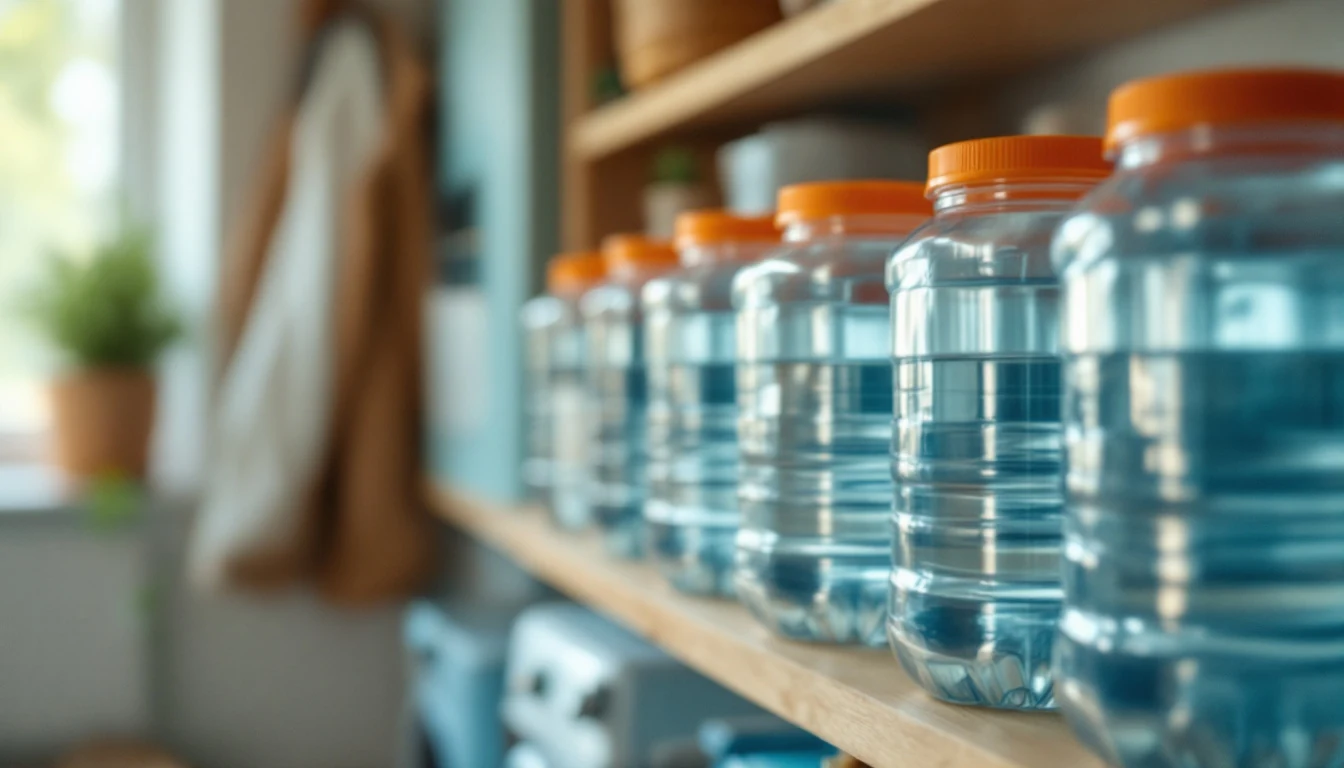
Emergency water storage works best with food-grade containers, a place you can reach and a rotation routine you can keep. The CDC recommends at least one gallon per person per day for three days, and two weeks if possible. Use portable jugs for a flexible start, then add a drum or fixed spigot tank when you have room for bulk water.
#1. Saratoga Farms Jug Set: best for starting a home stash
Saratoga Farms 5-Gallon Stackable Containers (4-pack)
Our verdict:
Best starter stash
Best for a home supply you can divide and rotate in parts.
View on Amazon- Four 5-gallon containers, 20 gallons in all
- Food-grade, BPA-free HDPE
- Flat tops and bottoms stack; handles for carrying
Keep in mind: keep full jugs where you can lift them safely rather than stacking them high.
Product details checked September 2026
Separate jugs let you use one while the others stay sealed. They also make it easier to put water in more than one reachable spot. Check the full weight you can handle and choose a location before filling. A jug set is a practical start when permanent tank plumbing would delay the whole plan.
#2. Augason Farms 55-Gallon Barrel: best bulk drum
Augason Farms 55-Gallon Water Barrel
Our verdict:
Best bulk drum
Best for a fixed garage or basement corner for drinking water.
View on Amazon- Food-grade, BPA-free polyethylene drum
- Two plug fittings for filling and draining
- Sized for a garage, basement or shed
Keep in mind: plan a compatible pump or siphon and access to its top fittings.
Product details checked September 2026
A drum puts a large share of the supply in one place. Set it where it will stay and keep the drawing equipment with it. Compare the drum setup guide if you need help choosing between top plugs and a built-in tap.
#3. Food-Grade 55-Gallon Spigot Tank: best for easy drawing
Food-Grade 55-Gallon Spigot Tank
Our verdict:
Best built-in spigot
Best for a home reserve you want to dispense into a jug.
View on Amazon- 55-gallon capacity for drinking-water storage
- Rotomolded polyethylene body
- Stackable shape
- Twist lid and built-in brass spigot
Keep in mind: leave space below the tap and follow the maker's support and stacking instructions.
Product details checked October 2026
The listing identifies potable storage and a spigot. That combination suits a reserve you want to draw from a tap. Keep the tap clean and accessible. Check the current dimensions and instructions before choosing the storage spot.
#4. waterBOB Bathtub Liner: best when a storm gives warning
waterBOB Bathtub Water Storage Bladder
Our verdict:
Best storm-warning backup
Best for filling a protected bathtub supply while the tap water is still safe.
View on Amazon- Holds up to 100 gallons in a standard bathtub
- Food-grade, BPA-free liner keeps water up to 16 weeks, per the maker
- Hand siphon pump included
Keep in mind: it depends on warning and a working tap; keep an already filled reserve too.
Product details checked September 2026
This is a backup you prepare for an approaching event. Make sure it fits the tub and learn the pump routine ahead of time. Treat it as a different layer from water that is stored and ready every day.
Factors to consider for emergency water storage
We followed the CDC's emergency water supply guidance and used the listings for container materials and drawing features. We did not test these by hand. Details come from each listing, so check the exact package before buying.
The CDC recommends food-grade containers and warns against reusing ones that held toxic chemicals. A known container history matters. Choose tight closures, useful fill access and a clean way to draw the water. If you are unsure about a tank's drinking-water use, ask the maker about the exact model.
Put the stash where you can use it
The CDC calls for a cool place, away from direct sunlight and toxic substances such as gasoline and pesticides. A spare corner near garage chemicals is not a good drinking-water location. Keep labels visible and leave access to the tap or pump so the water is useful during a power cut.
Split the reserve by use. Leave bulk water in place and keep manageable jugs ready to move. Check that doors still open and paths stay clear. A storage plan that blocks access is hard to use when the household is rushed.
Label, rotate and check
Mark home-filled containers as drinking water with the fill date, as the CDC advises. Replace that water every six months under the same guidance. Follow the package date for store-bought bottled water. Check closures and look for leaks whenever you rotate the stash.
See how to store water long term for the cleaning routine. Set the amount with emergency water planning, then keep a treatment backup using the survival purification steps.
Verdict: emergency water storage
Build emergency water storage around what you can fill, reach and maintain. Start with jugs, add a bulk drum or spigot tank if the room suits it, and use a bathtub liner as a warning-time backup. The rain water barrel guide joins the stored supply with other water options.
Questions people also ask
Is a bathtub liner a long-term reserve?
It is a fill-before-the-event option. Keep a separate supply already filled so a sudden outage does not leave you waiting for a warning.
How do I label home-filled water?
The CDC says to mark it as drinking water and include the storage date. Put the label where you can read it without moving the container.