
Surviving in Your Car: Stay Safe Overnight
If you are stuck in your car overnight in a winter storm, stay inside, call for help, run the engine about ten minutes per hour only with a clear exhaust pipe, and use blankets and warm clothes from your car kit.
Last updated November 2026
Contents9
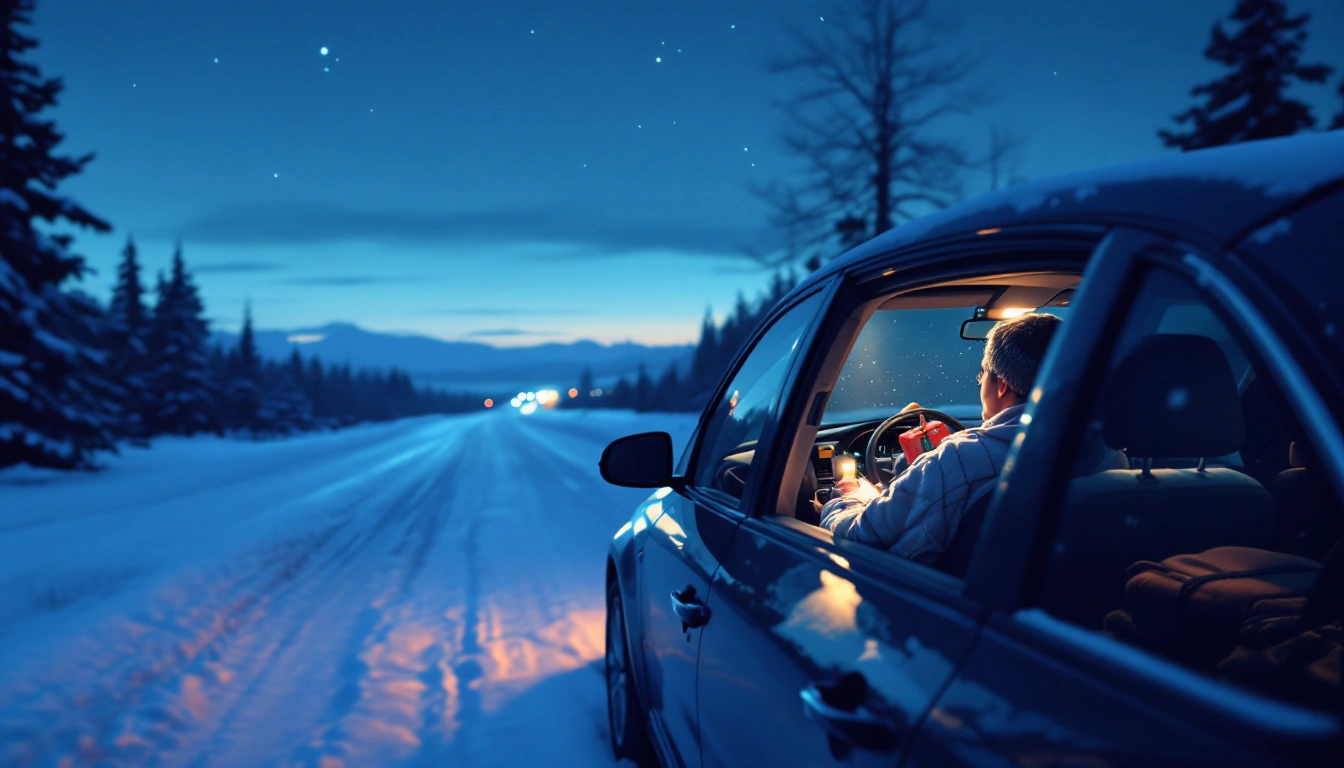
If you must spend a night in your car, stay inside, call for help, and use your car kit emergency supplies before you try to walk for help. In a winter storm, run the engine about ten minutes each hour only when the exhaust pipe is clear, and use blankets and warm clothes between those runs.
Breakdowns, empty fuel, closed roads and winter storms can leave you in a car far longer than you planned. A stocked kit and a few habits before the trip can turn a long wait into a survivable night.
Stay in the car unless shelter is very close
Ready.gov's winter weather page tells drivers who are trapped to stay inside the car.
The National Weather Service adds that if your car gets stuck during a storm, you should stay in the vehicle because you can become disoriented quickly in wind-driven snow and cold.
Leave hazard lights on when it is safe. Pull as far off the traveled lane as you can without getting stuck. If a power line falls on the car, Ready.gov's car safety page says to stay inside until a trained person removes the wire.
Prepare before you drive
Most unplanned nights in a car begin with a trip that looked routine at departure.
- Check weather and road reports before long trips, as Ready.gov's car page advises.
- Keep the fuel tank full when storms threaten. Ready.gov says a full tank also helps keep the fuel line from freezing.
- Store a car emergency kit. Ready.gov's car page lists jumper cables, a reflective triangle, an ice scraper, a car phone charger, a blanket, a paper map and cat litter or sand for traction.
- Add water, snacks, warm clothing and a flashlight. The winter weather page lists warm clothes, blankets, bottled water and non-perishable snacks for the car.
- Tell someone your route and when you expect to arrive.
First steps when you realize you are stuck
Early calm steps protect fuel, battery and phone power.
- Stop in the safest place you can reach. Use hazard lights and the parking brake.
- Call for rescue or roadside help if you need it. Share your location, how many people are with you and what went wrong.
- Move kit items from the trunk into the passenger area.
- Put on your warmest layers, hat, gloves and dry socks if you have them.
- Save phone battery for updates and emergency calls. Note mile markers, exit numbers or cross streets before signal drops.
For a breakdown on the shoulder, the roadside emergency kit guide covers visibility, calling for help and staying safe while you wait.
Stay warm without running the engine constantly
- Wear loose layers and cover your head and hands.
- Sit on the seat rather than on the floor, and keep feet off the coldest areas when you can.
- Wrap up in blankets or a sleeping bag from the kit.
- Share layers with passengers so everyone has cover.
Engine heat and carbon monoxide
Carbon monoxide is odorless and can build up inside a running car when exhaust cannot escape. The CDC notes that fumes from cars and trucks can poison people inside the vehicle when exhaust leaks or cannot vent.
The National Weather Service gives these steps when your car is stuck in a storm:
- Run the motor about ten minutes each hour for heat.
- Open the window a little for fresh air while the motor runs.
- Clear snow from the exhaust pipe before each run.
- Turn on the dome light at night when the engine runs so rescuers can see you.
Before each run, confirm the tailpipe is free of snow, mud and ice. Stop the engine if you smell exhaust inside or if anyone feels ill. The CDC lists headache, dizziness, weakness, upset stomach, vomiting, chest pain and confusion as common carbon monoxide symptoms. If you suspect poisoning, get to fresh air immediately. Follow the National Weather Service limit of about ten minutes of motor time each hour rather than running the engine all night.
Food, water and phone power
Energy and fluids help your body produce heat.
- Drink water from stored bottles first.
- If bottles run out, melt snow for drinking water instead of eating unmelted snow, which the National Weather Service says will lower your body temperature.
- Eat non-perishable snacks from your kit.
- Charge the phone with a car charger during an engine run, or use a stored external battery.
For kit packing ideas, see the car kit build guide.
Signal for rescue
Help needs to find the car before you exhaust fuel, battery or body heat.
- Keep hazard lights on when the battery allows.
- Tie a bright cloth, preferably red, to the antenna or door handle when it is safe, per the National Weather Service.
- Place the reflective triangle from your kit when you can do so without stepping into traffic.
- After snow stops falling, raise the hood to show you need help.
- Stay with the vehicle unless you can see nearby shelter you know is open.
If you must leave the car briefly, mark the path back to the door.
Know cold injury signs
Long cold exposure can turn serious even inside a car.
Ready.gov's winter page lists frostbite signs as numbness, white or grayish-yellow skin, and firm or waxy skin. It lists hypothermia signs as shivering, exhaustion, confusion, fumbling hands, slurred speech and drowsiness, and notes that a temperature below 95 degrees Fahrenheit is an emergency.
If someone shows these signs, follow Ready.gov: move them to the warmest part of the cabin, add dry layers, warm the center of the body first, and keep the person dry and wrapped in blankets.
Car overnight kit checklist
- Restart: Jumper cables
- Visibility: Triangle, flashlight, bright cloth
- Warmth: Blanket, hat, gloves, socks, warm jacket
- Fuel and traction: Full tank when storms threaten; cat litter or sand
- Communication: Phone, car charger, paper map
- Sustenance: Bottled water, non-perishable snacks
Review the kit when seasons change. Swap water and snacks that sat through summer heat, and test the flashlight and charger. The car kit emergency supplies guide adds picks that fit a trunk, on top of Ready.gov's list.
Questions people also ask
Should you leave your car if you are stranded overnight?
Ready.gov tells drivers who are trapped in a car to stay inside. The National Weather Service adds that you should not leave the vehicle during a storm because wind-driven snow causes quick disorientation.
How long can you run the car heater when stranded?
During a winter storm, the National Weather Service limits heater use to about ten minutes each hour. See the Engine heat and carbon monoxide section for exhaust and window steps.
What should you do if snow blocks your tailpipe?
Clear snow from the exhaust pipe before you start the engine. The National Weather Service links a blocked pipe to carbon monoxide poisoning inside the car.
What belongs in a car kit for an unplanned night?
Ready.gov lists jumper cables, a reflective triangle, a blanket, a phone charger, water, snacks and traction aids in the car. Its winter page also lists warm clothes and a flashlight.
What carbon monoxide symptoms should you watch for in a car?
The CDC lists headache, dizziness, weakness, upset stomach, vomiting, chest pain and confusion as common carbon monoxide symptoms. The CDC also notes that breathing in a lot of carbon monoxide can make you pass out.
Can you sleep with the engine running in a stranded car?
The National Weather Service says to run the motor about ten minutes each hour when you are stuck in a storm. Ready.gov lists warm blankets and clothes for the car.