
4 Auto Transfer Switch Picks: How They Work and Which Type You Need in 2026
As an Amazon Associate, this website earns from qualifying purchases.
The short answer
An auto transfer switch moves your home or RV onto backup power safely and without you lifting a finger. Have a licensed electrician install any switch tied to house wiring.
Last updated September 2026
Contents10
- #1. Generac 200A Next Gen ATS: best for a whole-home standby generator
- #2. Go Power TS-30: best automatic switch for an RV
- #3. Nature's Generator 30A Manual Switch: best manual option for a portable generator
- #4. Kidde Battery CO Alarm: best safety add-on for any generator
- Factors to consider when choosing a transfer switch
- How an auto transfer switch works
- Why backfeeding is dangerous
- Automatic vs manual transfer switch
- Generator safety with any transfer switch
- Is an auto transfer switch right for you
Our top 4 picks
- 1Best for a whole-home standby generator
 Generac 200A Next Gen Automatic Transfer Switch
- Moves a whole 200-amp home load to a compatible Generac standby generator on its own
- Rated for 120/240V single-phase service
- NEMA 3R aluminum enclosure for indoor or outdoor mounting
- 2Best automatic switch for an RV
 Go Power TS-30 Automatic Transfer Switch
- Handles two 30-amp sources, such as shore power and a generator
- Built-in delay for generator start-up
- Compact box sized for RVs, boats and off-grid setups
- 3Best manual option for a portable generator
 Nature's Generator 30A Manual Transfer Switch
- UL-listed manual switch rated 30 amps at 120V
- Supports up to six circuits you pick yourself
- Kit includes an L5-30P power inlet and a 30A cord
- 4Best safety add-on for any generator
 Kidde Battery-Powered CO Alarm
- Runs on two AA batteries, so it keeps working in an outage
- 85-decibel alarm with a red LED for carbon monoxide
- Mount on a wall or stand on a table; no wiring
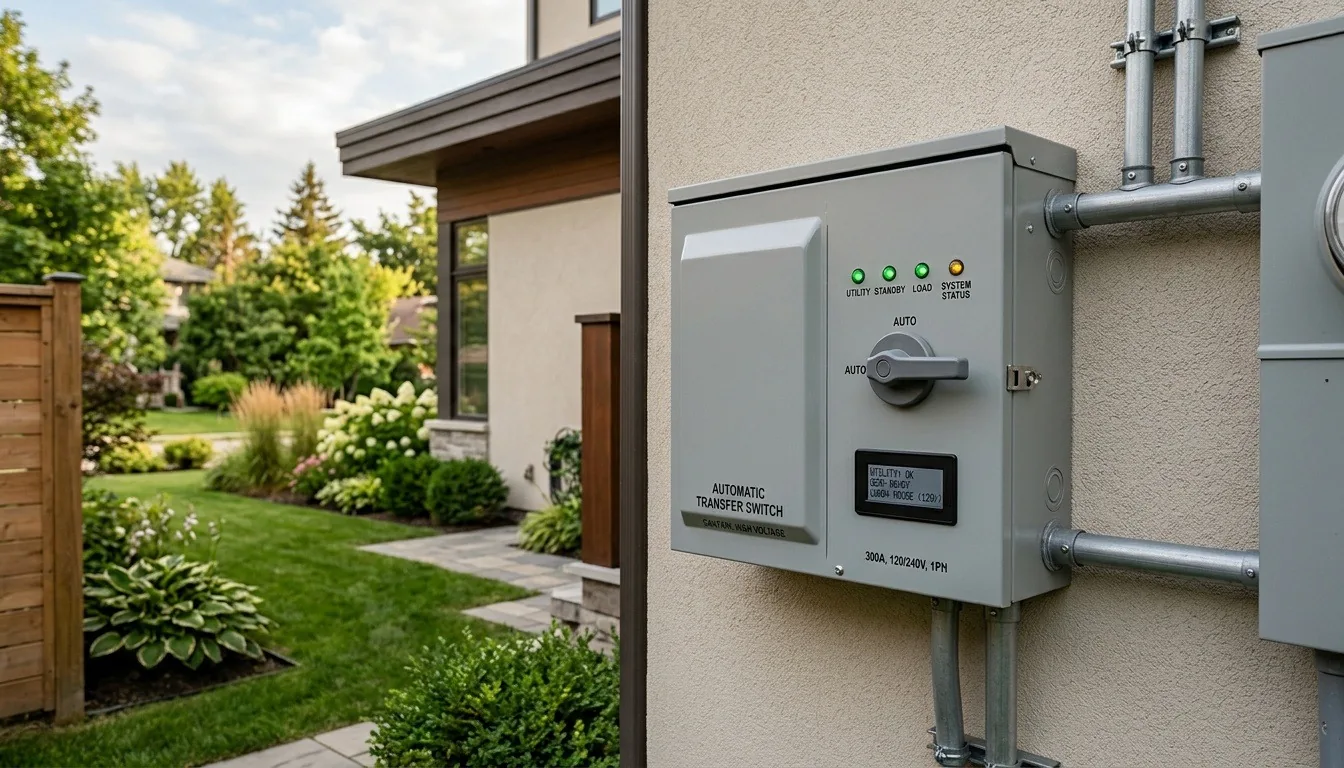
An auto transfer switch is the part of a backup power setup that makes it safe. It sits between your home, the power line and a generator. When the grid fails, it cuts your home off from the grid. Then it hooks up the backup power. When the grid comes back, it switches you back. Without a switch, a generator tied to house wiring can put line workers and your own family at risk.
#1. Generac 200A Next Gen ATS: best for a whole-home standby generator
Generac 200A Next Gen Automatic Transfer Switch
Our verdict:
Best for a whole-home standby generator
Best for homes with, or planning, a compatible Generac standby generator.
View on Amazon- Moves a whole 200-amp home load to a compatible Generac standby generator on its own
- Rated for 120/240V single-phase service
- NEMA 3R aluminum enclosure for indoor or outdoor mounting
- Mechanical interlock stops utility and generator power connecting at once
Keep in mind: it is made for compatible Generac standby units and needs professional installation.
Product details checked September 2026
#2. Go Power TS-30: best automatic switch for an RV
Go Power TS-30 Automatic Transfer Switch
Our verdict:
Best automatic switch for an RV
Best for RVs that run on either shore power or a generator.
View on Amazon- Handles two 30-amp sources, such as shore power and a generator
- Built-in delay for generator start-up
- Compact box sized for RVs, boats and off-grid setups
Keep in mind: it is for 30-amp RV systems, not home panels.
Product details checked September 2026
#3. Nature's Generator 30A Manual Switch: best manual option for a portable generator
Nature's Generator 30A Manual Transfer Switch
Our verdict:
Best manual option for a portable generator
Best for homes that use a portable generator for a few key circuits.
View on Amazon- UL-listed manual switch rated 30 amps at 120V
- Supports up to six circuits you pick yourself
- Kit includes an L5-30P power inlet and a 30A cord
Keep in mind: it is not automatic. You start the generator and flip the switches yourself, and it still needs an electrician to install.
Product details checked September 2026
#4. Kidde Battery CO Alarm: best safety add-on for any generator
Kidde Battery-Powered CO Alarm
Our verdict:
Best safety add-on for any generator
Best for every home that runs a generator.
View on Amazon- Runs on two AA batteries, so it keeps working in an outage
- 85-decibel alarm with a red LED for carbon monoxide
- Mount on a wall or stand on a table; no wiring
Keep in mind: one alarm is not enough for a whole home. Ready.gov advises working CO detectors on every level.
Product details checked September 2026
Factors to consider when choosing a transfer switch
We started from the safety rules in the American Red Cross generator guidance and Ready.gov's power outage page. We picked switches for the three common setups: a home standby generator, an RV, and a portable generator at home. We did not test them by hand. Details come from each listing, so check the current page, and ask an electrician which switch fits your panel and generator.
How an auto transfer switch works
- It watches the grid. The switch senses utility voltage all the time.
- It detects an outage. When power drops, it signals the standby generator to start.
- It transfers the load. Once the generator is ready, the switch disconnects the grid and connects the generator.
- It switches back. When utility power is steady again, it moves the load back to the grid and lets the generator cool down and stop.
This break between the grid and the generator is the key safety feature. It stops generator power from flowing back out onto the utility lines.
Why backfeeding is dangerous
The Red Cross is clear on this point. Never try to power house wiring by plugging a generator into a wall outlet. This is called backfeeding. It can kill line workers, and it puts your neighbors and your own home at risk too.
To hook a generator to your house wiring, the Red Cross says to have an electrician put in a transfer switch. The work should follow the National Electrical Code and local codes.
Automatic vs manual transfer switch
- Automatic: switches on its own, even if nobody is home. Standard with standby generators. It costs more and needs a compatible generator.
- Manual: you flip it when you start a portable generator. It costs less and works with many portable generators. It needs you to be home and awake.
Either type should be sized to your generator and the circuits you need. An electrician can help you choose.
Generator safety with any transfer switch
A transfer switch makes the wiring safe. It does nothing about exhaust. Ready.gov's power outage page says generators and fuel should always be used outdoors and at least 20 feet away from windows, doors and attached garages. It also says to install working carbon monoxide detectors on every level of your home. The CDC's carbon monoxide page adds: never use a generator inside your home or garage, even with doors and windows open.
Let the generator cool before you refuel it, since fuel spilled on a hot engine can ignite. Keep it dry and out of rain or floodwater.
Is an auto transfer switch right for you
An automatic switch makes sense if you have a standby generator or plan to buy one. It also helps if someone at home needs power for medical gear. For a portable generator used a few times a year, a manual switch is often enough. For short outages, a battery radio, flashlights and a cooler may be all you need. See the emergency radio guide and the car kit emergency supplies hub for the low-cost side of outage prep.
Questions people also ask
What does an auto transfer switch do?
It watches utility power. When the power fails, it disconnects your home from the grid and connects it to a backup source like a standby generator. When power returns, it switches back.
Do I need an electrician to install a transfer switch?
For any switch tied to your home's wiring, yes. The American Red Cross advises having an electrician install a power transfer switch following the National Electrical Code and local codes.
Can I plug a generator into a wall outlet instead?
No. The Red Cross warns that plugging a generator into a wall outlet, called backfeeding, puts utility workers, neighbors and your household at risk of electrocution.
Is an automatic transfer switch worth it over a manual one?
With a standby generator, an automatic switch is standard and works even if nobody is home. With a portable generator, a manual switch is common and costs less, but you must switch it yourself.