
Paracord Projects for Preppers: Practical Uses
Keep a hank of Type III nylon cord for tarp lines, gear lashings and quick repairs; it is not life-safety gear.
Last updated November 2026
Contents6
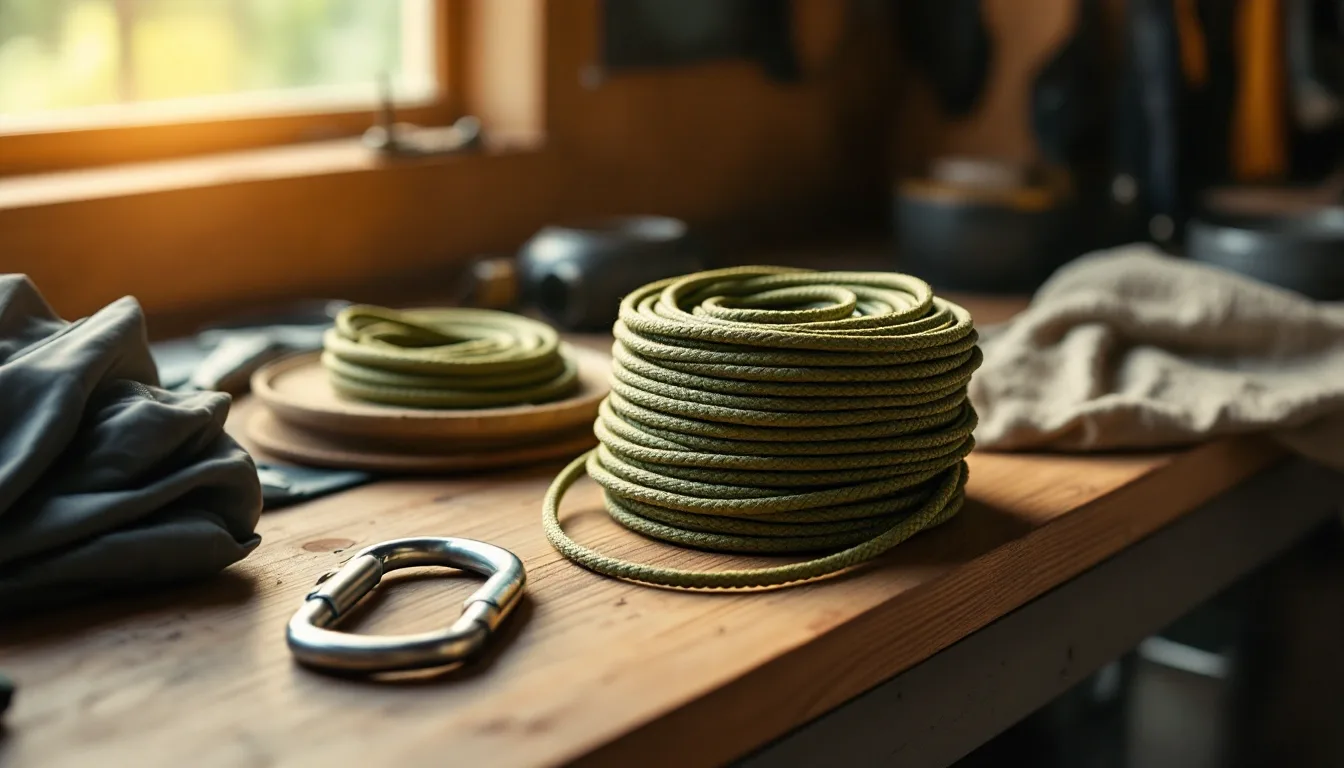
Paracord projects for preppers boil down to one job: carry strong, light cord you can deploy fast for shelter, gear and small repairs. Pair a hank of Type III nylon cord with the items already on official lists, such as a tarp and duct tape, instead of treating braided bracelets as survival gear on their own.
What paracord is used for in a prepper kit
Ready.gov's disaster kit list includes plastic sheeting, scissors and duct tape to shelter in place. That kit is built around seals and patches indoors. Outdoors, the National Park Service lists a tent, tarp or emergency space blanket as lightweight emergency shelter options. Cord fills the gap between those items: it lets you hang a tarp, lash a load, or tie a snapped buckle until you can replace it.
The military spec MIL-C-5040H was canceled in March 2025. Its industry version, PIA-C-5040 (renamed from the military spec in 1997), covers braided nylon cord. Sterling Rope lists an MBS rating of 550 lb on its 550 Type III parachute cord and warns that accessory cord is not for lead climbing ropes or other life-safety use.
What to buy and where to store it
- Pick braided nylon cord with a label you can read. Check for material and any cited specification such as PIA-C-5040.
- Coil one hank in a go-bag and keep a second hank at home near your prepper supplies.
- Store cord dry and out of sun when you can. Heat and UV age nylon faster than cool, shaded storage.
- Keep scissors or a knife in the same bin. Ready.gov already calls for scissors in the basic kit.
Leave novelty projects out of the first purchase. Finish water, food and radio needs from the prepping guide before you spend time on decorative weaves.
How paracord fits the official buy order
Ready.gov groups shelter items with plastic sheeting and duct tape, tools with a wrench or pliers, and signaling with a whistle. Cord does not appear on that list, so treat it as an add-on after those lines are covered. A practical order looks like this:
- Meet water and food targets from the prepper supplies list.
- Add a hand-crank or battery radio from the emergency radio guides.
- Stock sheeting, tape and scissors for indoor shelter-in-place steps on Ready.gov shelter guidance.
- Add nylon cord plus a tarp if you camp, hike, or may need a quick outdoor roof.
That sequence keeps paracord in the tool category instead of pushing aside items you cannot improvise.
Knots to learn once
You do not need dozens of decorative weaves. Three patterns cover most prepper jobs:
- Bowline: makes a fixed loop that will not slip under load.
- Two half hitches: ties a working end to a post or ring.
- Trucker's hitch or taut-line hitch: adds tension on ridge lines and corner guys.
Practice each knot on a scrap length indoors. Wet or gloved hands make small cord harder to manage, so repeat the steps until you can tie them without a video. Keep a folded knot card in the same bin as the cord.
Six paracord projects that match real kit jobs
Each project uses common knots you can practice at a table.
1. Tarp ridge line and corner ties
You need a tarp or plastic sheeting, cord, and two fixed points (trees, fence posts, or door handles you are allowed to use).
- Cut a ridge-line length about twice the span between anchors, plus extra for knots.
- Tie a bowline at each end around the anchors, or loop over a padded branch.
- Lay the tarp over the line and tie corner lines down at a low angle with a taut-line hitch so you can retighten as the nylon stretches.
- Angle corners outward so water runs off, not into the center.
Indoor sealing still follows Ready.gov shelter guidance: thick plastic sheeting and duct tape on windows and vents. Cord does not replace that step.
2. Quick-release pack compression strap
Use this when a zipper fails or a stuffed sack will not close.
- Wrap a single cord twice around the load, keeping wraps parallel.
- Tie a trucker's hitch or slippery half hitch on top so you can cinch tension.
- Tuck the free end so it cannot snag on branches or seat belts.
- Remove the strap before hoisting the load onto your back so the cord is not taking shoulder weight.
3. Tool or flashlight lanyard
A short loop keeps small tools from sinking to the bottom of a tub.
- Fold an about 3-foot length in half.
- Push the folded middle through a lanyard hole or handle gap to form a girth hitch.
- Pull the two tails through the loop and snug the hitch.
- Tie an overhand knot in the tail ends to stop unraveling.
4. Zipper pull or handle wrap
When a zipper tab breaks, a cord pull buys time until you replace the bag.
- Thread an about 10-inch cord through the zipper hole.
- Tie the ends with a square knot or attach them with a tight overhand knot.
- For handles, spiral-wrap about 18 inches around the grip and finish with two half hitches tucked flat.
5. Wearable hank (belt loop or bracelet)
This is storage, not a second tool kit.
- Weave a simple three-strand bracelet or girth-hitch a coiled hank to a belt loop.
- Leave a working end you can untie quickly.
- Do not pack the coil so tight that wet hands cannot free it.
6. Simple pet lead for short walks
Only when a proper leash is missing and the dog is calm.
- Clip or tie an about 6-foot length to a harness ring with a bowline, leaving the loop sized to the hardware.
- Braid a hand loop at the other end with an about foot-long tail tucked inside the braid.
- Stop using the lead if the dog chews the cord, and switch to real leash hardware when you have it.
Limits that keep paracord useful
Nylon accessory cord shines when loads are small and time is short. The Sterling Rope product page cited above lists cord for non-life-safety applications and warns that accessory cords are not for use as lead climbing ropes. It is a poor substitute for webbing straps rated for cargo, rescue-grade rope, or any task where a fall could injure someone.
Cut a failed cord instead of climbing on frayed nylon. Keep heat and chemicals away from stored hanks; melted spots weaken the sheath. If a knot will stay loaded for days, check tension each morning, because nylon can stretch as humidity and temperature change.
The evacuation planning guides tie this skill back to the written plan that decides when you shelter or leave.
Questions people also ask
How much paracord should a prepper keep on hand?
Start with one hank you can pack in a go-bag and a longer coil at home. Add more only after you know the jobs you repeat, such as tarp corners or pack straps.
Is store-bought 550 cord the same as military spec?
No standard says a store product is spec cord. Check the label for a cited spec such as PIA-C-5040, which was renamed from MIL-C-5040H.
Can paracord replace duct tape in a kit?
No. Official kit lists pair sheeting and duct tape for indoor seals; cord is for outdoor tarp and lashing work.
Are paracord bracelets useful in emergencies?
They mainly keep a short length easy to reach. Treat wearable cord as storage, not gear rated for life-safety loads.
What knots matter most for prepper paracord projects?
Learn a bowline, two half hitches, and a tightening hitch, then drill them on scrap cord.
Can I use paracord for a pet leash in a pinch?
Only for short, supervised walks when no proper leash is available.