
Disaster types and official alerts
Understand common disaster hazards, verify an official alert and choose a practical household response using agency guidance.
Last updated October 2026
Contents5
Check the issuing agency, area and time of an alert, then read the action it asks you to take. Use the official notice for your location to decide whether to shelter, leave or change a journey.
Check an official alert
- Check who issued the notice, its time and the area it covers.
- Read the requested action and any evacuation boundary.
- Check local updates for roads, shelters and water services.
- Share the notice and your meeting place with your household.
In the United States, NWS alerts and FEMA’s public alert system provide official notices. Elsewhere, check the national weather or geophysical agency and local emergency authority.
Common hazards and the first decision
Earthquakes
| Meaning | First household decision | Official source |
|---|---|---|
| Shaking caused by a sudden release of energy within the Earth. | Drop, cover and hold on during shaking. Check your route and surroundings once it stops. | Ready.gov earthquake guidance |
Scroll for more →
Floods
| Meaning | First household decision | Official source |
|---|---|---|
| Water covers land that is normally dry; river flooding, flash flooding and storm surge develop in different ways. | Use the local evacuation instruction and a route clear of floodwater. | NWS flood guidance |
Scroll for more →
Storms and tropical cyclones
| Meaning | First household decision | Official source |
|---|---|---|
| Wind, heavy rain, lightning and coastal surge can create separate hazards within one storm. | Check the specific warning for your location and shelter or leave as instructed. | NWS hurricane guidance |
Scroll for more →
Landslides and avalanches
| Meaning | First household decision | Official source |
|---|---|---|
| Rock, debris or soil can move downslope under gravity. An avalanche is moving snow on a slope. | Avoid the affected slope and follow local evacuation instructions. | USGS landslide basics; NWS avalanche guidance |
Scroll for more →
Volcanic activity
| Meaning | First household decision | Official source |
|---|---|---|
| Ash, gas, lava and fast-moving hot material pose different risks around a volcano. | Follow the local volcano authority’s exclusion zones and travel instructions. | Ready.gov volcano guidance |
Scroll for more →
Heat and drought
| Meaning | First household decision | Official source |
|---|---|---|
| Extreme heat strains the body; drought is a prolonged shortage of water relative to local needs. | Use local heat and water-supply guidance when choosing shelter and arranging drinking water. | NWS heat guidance |
Scroll for more →
Wildfire
| Meaning | First household decision | Official source |
|---|---|---|
| Fire burns vegetation and can spread into settled areas. Smoke can affect people well beyond the flames. | Be ready to leave on the local authority’s order and check the route for closures. | Ready.gov wildfire guidance |
Scroll for more →
Tsunami and weather warnings
A tsunami is a series of waves caused by a large displacement of water, often after an undersea earthquake. Tropical cyclones are weather systems. The warnings use different monitoring networks: NOAA’s tsunami notices cover tsunami threats, while NWS weather alerts cover storms. Check the tsunami safety guidance for coastal warning signs and local actions.
Earthquake predictions and probabilities
An earthquake probability describes a chance over a stated area and period. It does not identify the date of the next earthquake. USGS explains earthquake prediction. Use local hazard information to prepare your home and response.
Understanding disaster trends
Disaster damage depends on the hazard, the people and buildings exposed to it, and their ability to cope. Check the period and definitions before comparing totals. UNDRR’s Global Assessment Report examines disaster costs and investment in reducing risk.
Space weather and impact notices
Solar activity can affect radio communication and power systems. NOAA’s Space Weather Prediction Center publishes forecasts and alerts. NASA’s Center for Near Earth Object Studies provides asteroid observations and impact-risk information. Read each agency’s notice for the affected systems and requested action.
Write down the action and contact steps
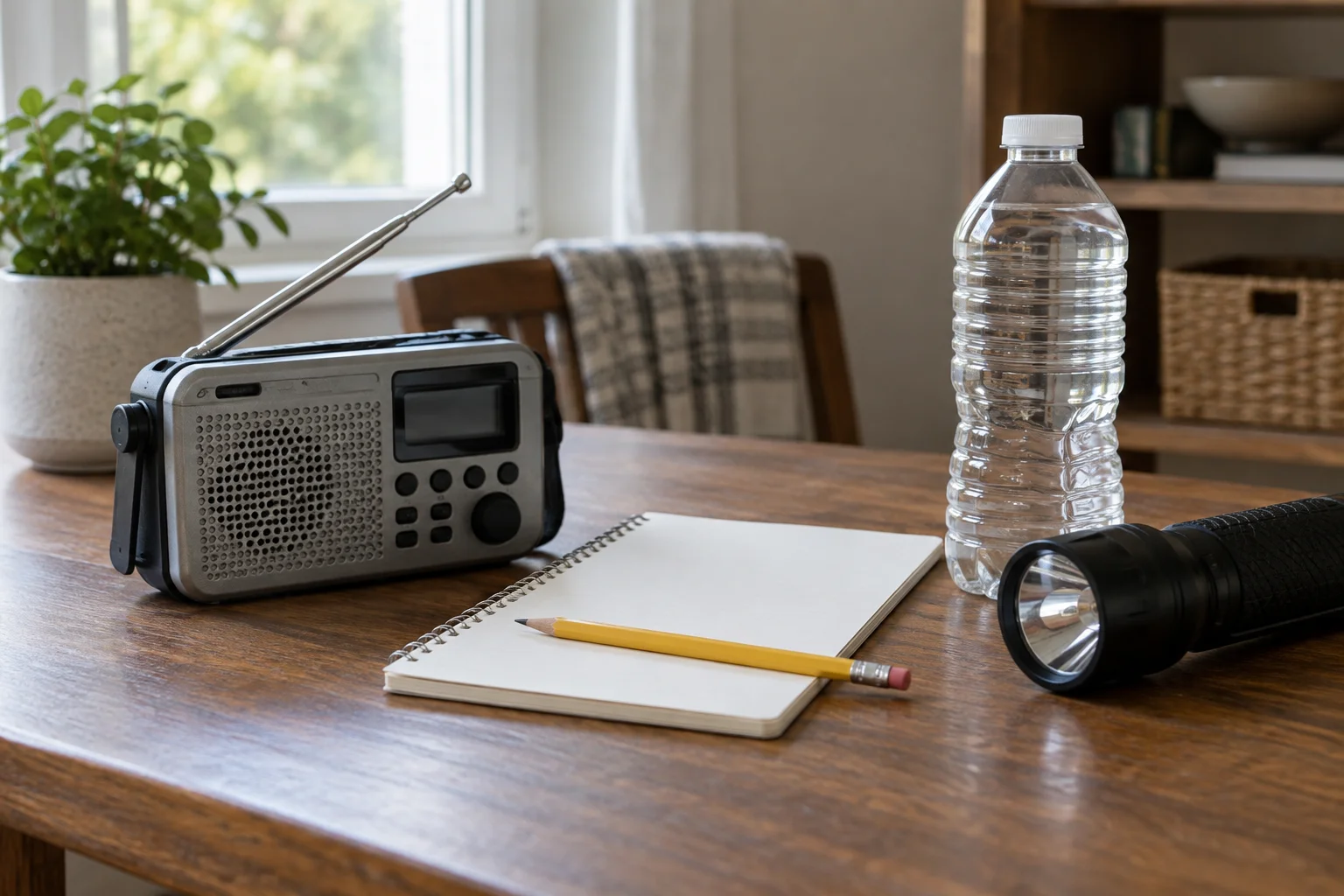
Record the local alert agency, a safe destination and an outside contact in your household plan. Keep essential supplies, a radio that works without mains power and drinking-water storage ready. Use the preparedness checklist to turn those choices into a routine.
Browse the 2012–2016 event catalog for examples and their sources.