
Emergency Preparedness: Where to Start
The four decisions behind every emergency preparedness plan, and where to go next for your specific hazard.
Last updated September 2026
Contents7
- The four parts of emergency preparedness
- Emergency preparedness by hazard
- Emergency preparedness for renters and apartment residents
- Emergency preparedness for households with kids, pets, or older adults
- Building emergency preparedness into a routine
- Official emergency preparedness sources
- Dated events for household planning
Emergency preparedness sounds bigger than it is. At its core, it is four decisions made once and kept current, not a long shopping list.
Emergency preparedness comes down to four things: a written plan, a basic kit, a way to get news when the power is out, and a way for your household to reach each other. Build those four, and you can handle most hazards with small additions per hazard.
The four parts of emergency preparedness
1. A written plan
Two meeting places, one out-of-area contact, and a note of who grabs what. This is the single page every other step builds on. See the full family emergency plan guide for the step-by-step version.
2. A basic kit
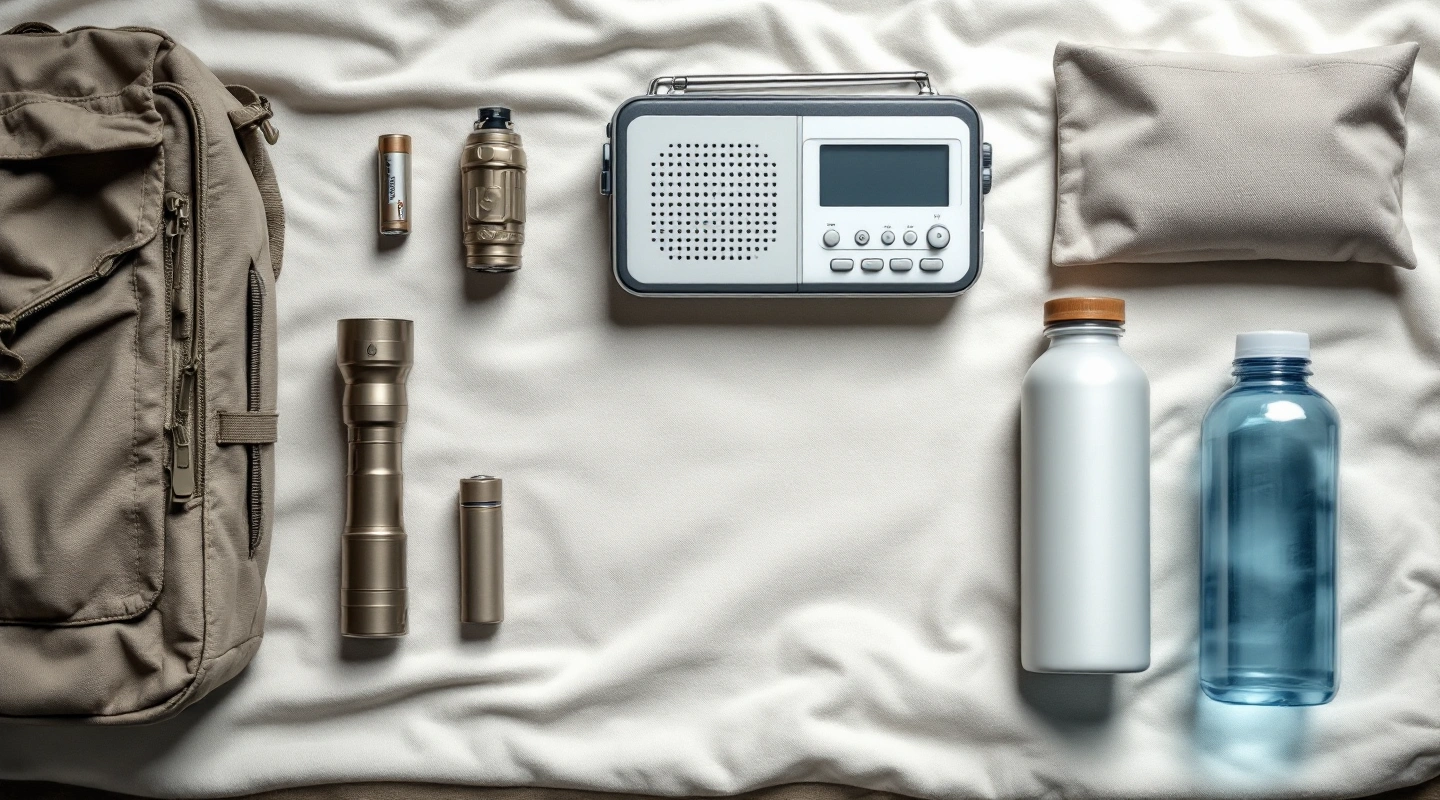
Water, food that needs no cooking, a flashlight, and basic first aid, sized to your household. Most of this can come from items you already own, checked twice a year.
3. A way to get news without power
A battery or hand-crank radio keeps you connected once cell towers and power both fail. This matters most in the first hours after a hazard hits.
4. A way to reach your household
An out-of-area contact and a second communication method, like text, cover the times a household is not all in one place when something happens.
Emergency preparedness by hazard
The four-part base above stays the same. Each hazard adds its own layer on top.
- Earthquake: no warning, so the plan and a reachable kit matter most. See the earthquake kit guide.
- Hurricane: days of warning, so timing and evacuation zone knowledge matter most. See the hurricane kit guide.
- Power outage: water storage and a way to charge devices matter most, regardless of the cause.
- Car travel: a separate car kit covers the times you are away from your home kit entirely.
Emergency preparedness for renters and apartment residents
A rented home or an apartment changes a few details, not the core plan.
- Ask your landlord what building-level plans already exist, like a shared generator or a posted evacuation route.
- Store your kit somewhere you control, since you may not have a garage or a yard shed.
- Keep a lease copy and your landlord's contact in your document pouch, alongside your ID and insurance papers.
Emergency preparedness for households with kids, pets, or older adults
A general plan needs small additions for some households.
- Kids should know the plan by heart, not just have it written down. Practice it like a fire drill twice a year.
- Pets need their own carrier and food, plus copies of their records. Many public shelters and hotels do not allow pets inside, per Ready.gov, so plan a pet-friendly place to stay.
- Older adults or anyone with a health condition should keep extra medication doses and a written summary of any condition in the kit.
Building emergency preparedness into a routine
A plan built once and never revisited drifts out of date. Check it twice a year, ideally at the spring and fall time changes, since that is already when most people check smoke detector batteries.
Update the plan when the household moves, adds a pet or changes its medicines. If a child gets a phone, agree on how they will check in. Confirm the addresses, contact numbers and responsibilities for the people who live with you now.
Official emergency preparedness sources
The four parts above follow the federal basics. Ready.gov's make-a-plan page walks through the written plan, Ready.gov's build-a-kit list covers supplies, and Ready.gov's be-informed page explains how alerts reach you. Your county emergency management office adds the local details, like shelter sites and alert sign-ups.
Dated events for household planning
Use a documented event to test the plan against a real place and hazard. The tables link each event to its agency record or research source:
- World disaster events by year and country
- Nepal disaster records
- India disaster records
- United States and Caribbean disaster records
- Southern Africa disaster records
- Nigeria disaster records
- Afghanistan disaster records
- Malaysia disaster records
- Indonesia disaster records
- Disaster types and official alerts
Questions people also ask
What is the very first step in emergency preparedness?
Write down two meeting places and one out-of-area contact. That single page is the base every other step builds on, and it costs nothing to make.
How is emergency preparedness different from a hurricane or earthquake kit?
Preparedness is the plan and habits behind any kit: meeting places, a contact, a way to get news. A hurricane or earthquake kit adds the specific gear each hazard calls for.
Do I need to prepare differently for each type of disaster?
The plan stays mostly the same. What changes is the kit and the timing: an earthquake gives no warning, a hurricane gives days, and each hazard adds its own gear on top of the same base plan.
How much does basic emergency preparedness cost?
The plan itself is free. A basic kit can be built almost entirely from items most households already own, with a few small gaps filled in over time.