
Emergency Evacuation: Orders, Timing, and What to Expect
The difference between a watch and an order, how evacuation traffic actually works, and what to do if you wait too long.
Last updated September 2026
Contents9
- Voluntary versus mandatory evacuation orders
- How much warning to expect, by hazard
- What actually happens during an emergency evacuation
- If you wait too long
- Emergency evacuation for pets and people who need help moving
- Where to go once you leave
- Emergency evacuation checklist before you go
- Emergency evacuation by car versus on foot
- Official emergency evacuation guidance
An emergency evacuation order is not one single thing. The type of order, the timing, and what actually happens on the road all matter more than most people expect.
Leave on a voluntary order, not a mandatory one. Voluntary orders come first and give you more time and less traffic. Waiting for a mandatory order often means leaving with everyone else at once.
Voluntary versus mandatory evacuation orders
A voluntary order means officials recommend leaving, but nobody will force you. A mandatory order means officials are telling you to leave now, though actual enforcement varies by area and hazard.
The safest move is leaving on the voluntary order. Traffic is lighter, shelters have more space, and you are not racing a hazard that has already gotten worse.
How much warning to expect, by hazard
- Hurricane: days of warning, tied to the storm's forecast track.
- Wildfire: minutes to hours, since fire spread can outrun a forecast.
- Flood: hours to days. It depends on the source: storm surge, a rising river, or a sudden flash flood.
- Earthquake: no warning before. Evacuation, if needed, happens after the shaking stops.
What actually happens during an emergency evacuation
Roads fill fast once an order goes out. This hits the main highways away from a coast or a fire line hardest. Gas stations run low fast too. Cell networks often get slow even when they stay up.
- Fill your tank before an order is issued, not after.
- Pick a route away from the main highway if you know a longer but less crowded option.
- Bring your kit and documents. Do not assume you can come back for them.
- Tell your out-of-area contact where you are headed once you are safely on the road.
If you wait too long
Sometimes an order comes late, or traffic is already bad by the time you try to leave.
- Try a less obvious route, even if it takes longer, rather than sitting in a main evacuation route.
- Call your local emergency line for real road conditions instead of guessing from traffic apps alone.
- Shelter in the sturdiest interior room if travel looks more dangerous than staying, and wait for further instructions.
Emergency evacuation for pets and people who need help moving
Plan pet transport before an order is issued. Ready.gov notes that many public shelters and hotels do not allow pets inside, so decide where your pet will stay now, not during the drive.
Anyone who cannot drive or move quickly should arrange a ride and an earlier departure time in advance, since waiting for the general order often means leaving too late to beat the worst traffic.
Where to go once you leave
Decide your destination before the season starts, not on the drive. A friend or family member outside the hazard area works well, since it skips shelter lines and gives you a known, comfortable place to stay.
If you do not have that option, know your county's shelter locations in advance. Most shelters ask for ID. Many do not allow pets inside, so plan pet lodging separately. Check what a specific shelter allows before you arrive, not after.
Emergency evacuation checklist before you go
Run through this short list before you pull out of the driveway.
- Full tank of gas and cash on hand.
- Kit, documents, and medications loaded in the car.
- Home secured: doors locked, windows closed, utilities off if instructed.
- Out-of-area contact told where you are headed.
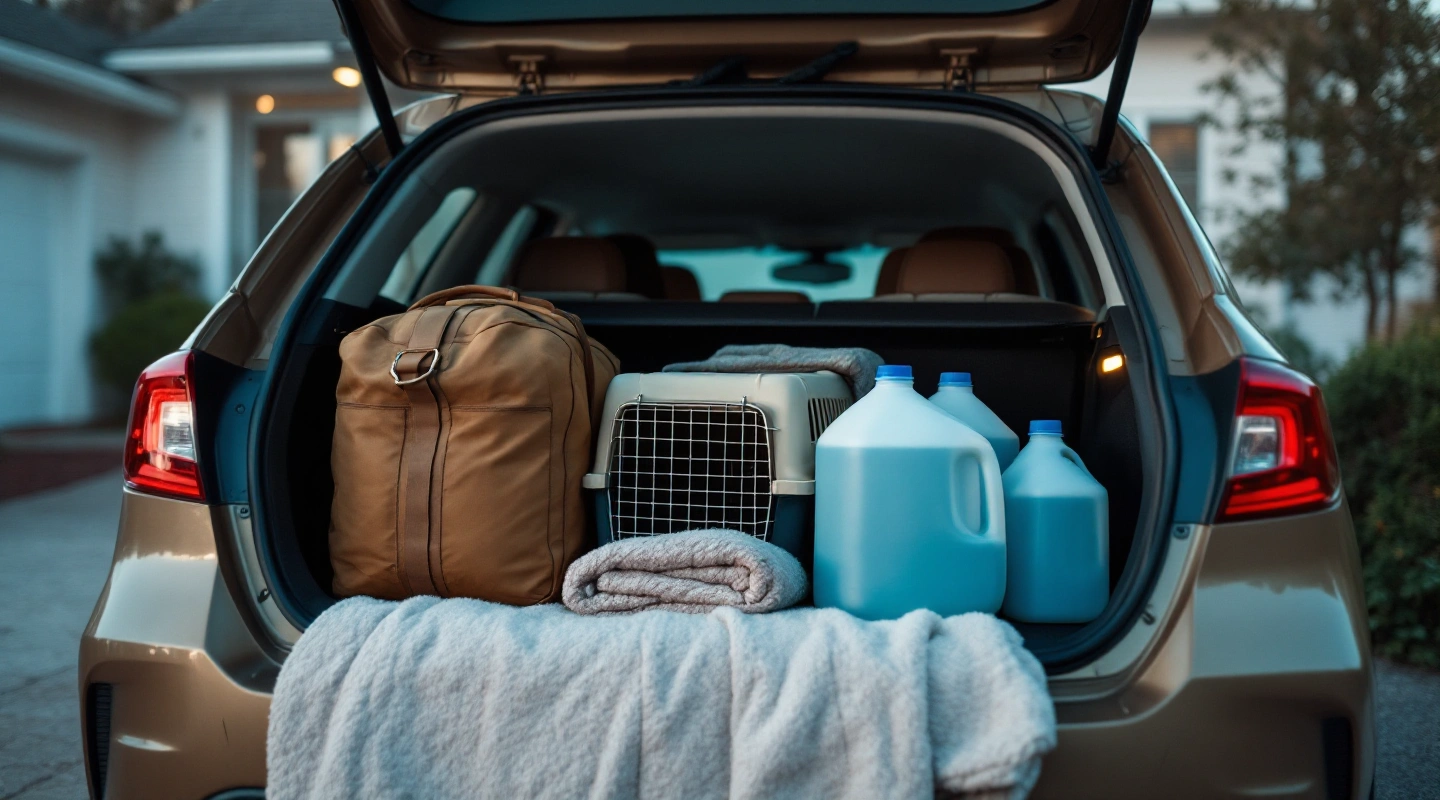
- Pets, carriers, and pet supplies loaded.
A short checklist run under pressure beats trying to remember everything from memory.
Emergency evacuation by car versus on foot
Most evacuation planning assumes a car. Not every household has one, or a working one, when an order comes.
- By car: plan two routes out, since the main one may be closed or jammed. Keep a paper map as backup, since GPS needs both a charged phone and a working signal.
- On foot or by transit: know your nearest transit line and its likely shutdown point during a major hazard. A go-bag matters more here than a full car kit, since you can only carry what you can walk with.
- With a household member who cannot walk far: arrange a ride in advance rather than assuming public transit or walking will work on the day.
Whichever way you plan to leave, tell your out-of-area contact the method too, not just the destination.
Official emergency evacuation guidance
Orders come from your local officials, so their channels are the ones to follow. Ready.gov's evacuation page explains how to plan routes, what to take, and when to leave. Ready.gov's pet guidance covers taking animals with you.
Questions people also ask
What's the difference between a voluntary and mandatory evacuation order?
A voluntary order means officials recommend leaving but cannot force you. A mandatory order means they are telling you to leave now, though enforcement varies by area. Leave on the voluntary order if you can.
How much warning does an emergency evacuation usually give?
It depends on the hazard. A hurricane can give days. A wildfire can give minutes to hours. An earthquake gives none at all, since evacuation there means leaving after the shaking, not before it.
What if I miss the window and traffic is already bad?
Consider a shorter, less obvious route, or shelter in the sturdiest interior room if travel looks more dangerous than staying. Call your local emergency line for road condition updates rather than guessing.
Do I have to evacuate if an order is issued for my area?
A voluntary order is a recommendation. A mandatory order is not legally enforceable everywhere, but ignoring one means responders may not be able to reach you safely. Officials issue mandatory orders when the risk is serious.