
2500 Gallon Water Storage Tank: Planning Guide in 2026
Work out the load, site, overflow and refill plan for a 2,500-gallon rain or well tank, and compare nearby capacity choices.
Last updated October 2026
Contents6
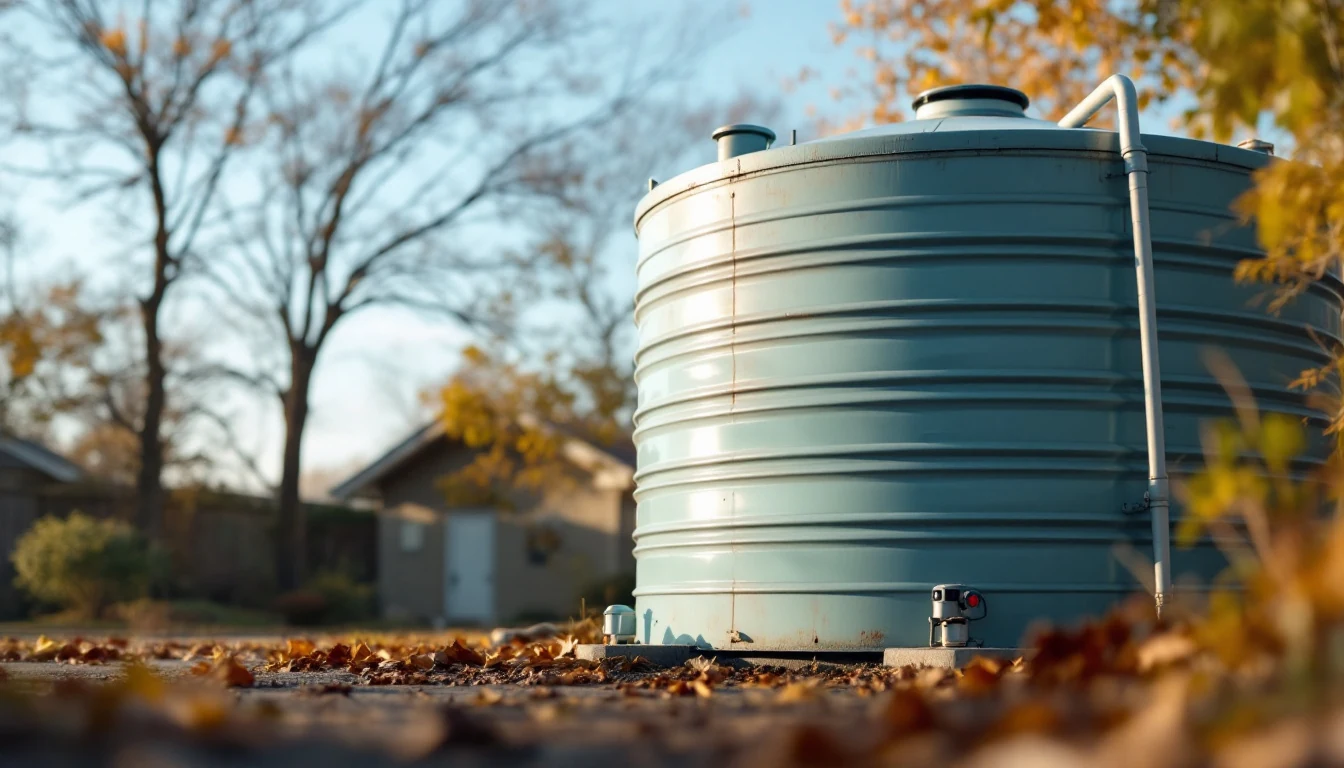
A 2500 gallon water storage tank suits a large rain or well reserve. It can help when a smaller tank runs short. Full, it holds about 20,850 pounds of water, using 8.34 pounds per US gallon calculated from USGS density data. The tank's own weight comes on top. Start with the load and use of the reserve, then choose its shape and location.
Match the capacity to the refill source
A rain tank needs a roof and rainfall pattern that can fill it. A well tank needs a refill rate that can keep up with use over time. A larger store can bridge a gap between supply and demand, but cannot fix a source that falls short all season. Check when you will draw the water and when the next refill is likely.
For rain collection, size the reserve around the dry spell you want to bridge. Snohomish County's rainwater guide bases the choice on the roof area feeding the downspout, summer watering needs and available space. Put those three inputs beside your target capacity. A 2,500-gallon body that fits the yard can still be too large for the roof to refill.
For a well, ask the installer to use its measured flow rate to choose the pump. Check the controls too.
If fire reserve is part of the plan, involve the local fire authority before ordering. Ask what stored volume must remain available, where vehicles need access and what connection they use. Get the answers for your site. A fire-use label alone may not meet your local rules.
Site and overflow for a 2500 gallon water storage tank
Get the size from the drawing for your exact model. A round vertical tank may suit a broad patch of ground, while a low horizontal model needs more length. Mark the lid and outlet positions as well as the body. Keep enough space to service the tank without reaching over a fence or squeezing behind it.
Treat the base and overflow as one site decision. The county guide requires level support for the full tank and sends overflow away from building foundations. Mark both the support area and the excess-water route before ordering. Have the maker or installer choose support suited to your model and ground.
For a rain-fed reserve, check what happens when the tank fills while rain is still falling. Texas A&M AgriLife Extension calls for overflow and vent openings with screens to keep mosquitoes and small animals out. Keep both in the design, along with the inlet, outlet and service port. Ask the installer to show how you will inspect the screens and reach the openings.
Compare 1,500, 2,500 and 3,000 gallons
The following water-only loads use the same USGS-based calculation:
| Capacity | Water load |
|---|---|
| 1,500 US gallons | About 12,510 lb |
| 2,500 US gallons | About 20,850 lb |
| 3,000 US gallons | About 25,020 lb |
Scroll for more →
The step up in capacity also changes the load, even if two models look much the same. Compare the 1500 gallon guide and 3000 gallon guide against your refill and site plans. Smaller connected tanks may be worth discussing when a single large body cannot pass through the gate.
Drinking water and local rules
Decide whether the reserve will serve the garden, the household or a separately agreed fire use. For drinking water, use the CDC's food-grade container guidance for the tank and fittings. Roof runoff also needs a treatment plan: the EPA notes bacteria and chemicals from roofs. Keep water meant only for the garden labelled for that use.
Check with the local building and health offices before connecting the tank to household plumbing. Tell them where the water comes from and how you will use it. Include plans to drink it or keep a fire reserve. Snohomish County, for example, directs potable rainwater users to separate health rules. That example is a reason to ask locally, not a rule for every state.
Factors to consider before ordering
We used official water-density, storage and rain-system guidance for this planning guide. Get a quote for delivery and setup. Include unloading and the base work. Check access to the final spot. Compare the range of water storage tanks before settling on one capacity.
Verdict: 2500 gallon water storage tank
A 2500 gallon water storage tank suits a measured bulk reserve with space, support and a refill source to match. Agree on the site and plumbing before ordering it. The rain water barrel guide connects this large-storage plan with your separate emergency drinking-water supply.
Questions people also ask
Is a 2,500-gallon tank automatically a fire reserve?
No. Ask the local fire authority about the reserve, connections and access it requires before specifying the tank.
Can a drinking-water tank make roof runoff safe?
The tank only stores it. Roof runoff can carry germs and chemicals, so the water source needs its own treatment and testing plan.